research
Material Action as System
Practice-based research investigating how bodily impulse relocates through material action, digital reactivation, and temporal looping
The indexes below outline the research system: material actions (A), residue reactivations (B), loop behaviors (C), and bound-set types (D). These are not individual works, but parameters that define how impulse is carried, transformed, and repeated. The research operates through a repeatable system in which bodily actions generate material residues that are digitally reactivated and shaped through temporal loops. Individual works function as controlled runs within this system, allowing behaviors of matter, mediation, and time to be observed rather than resolved.
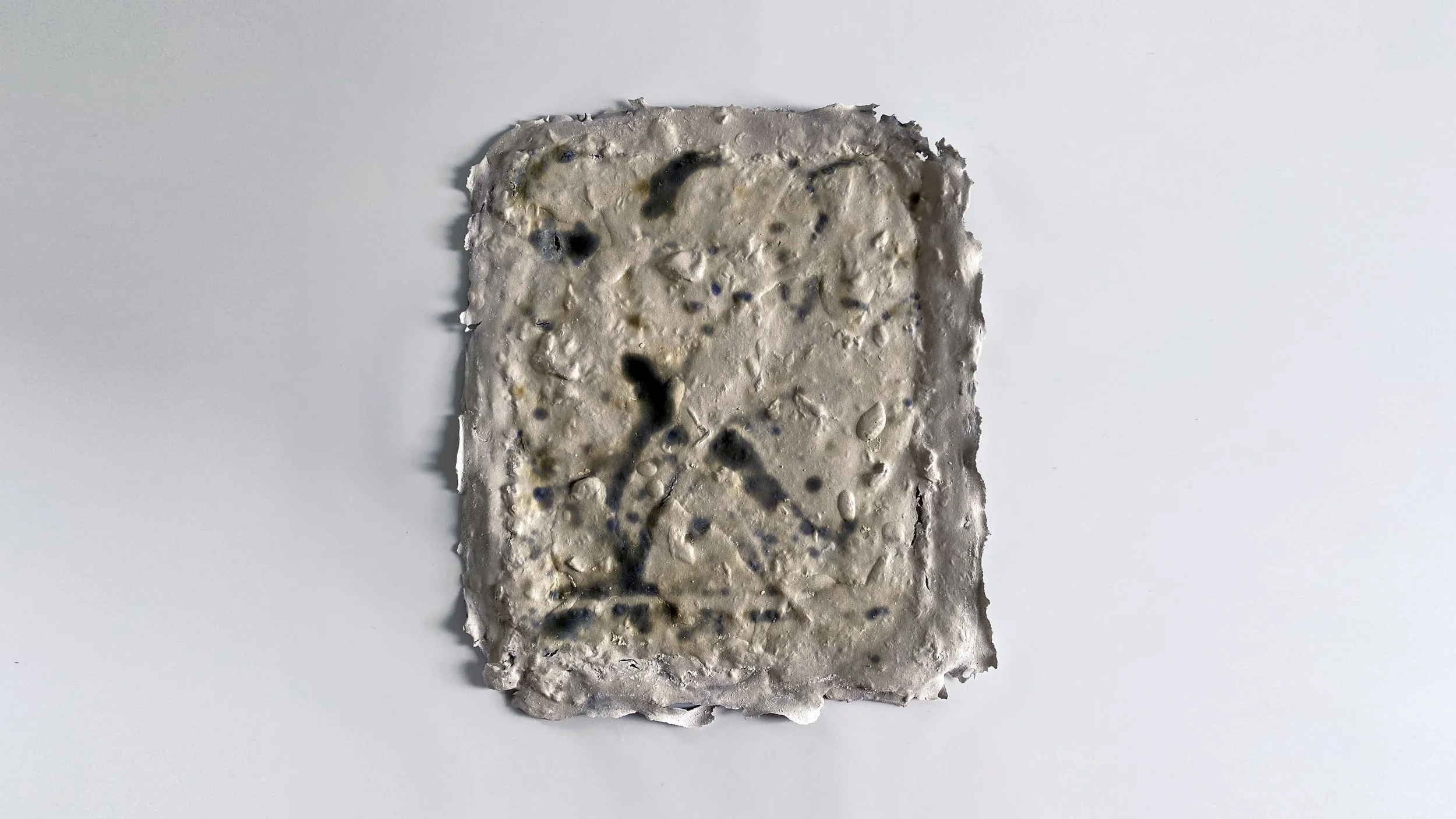
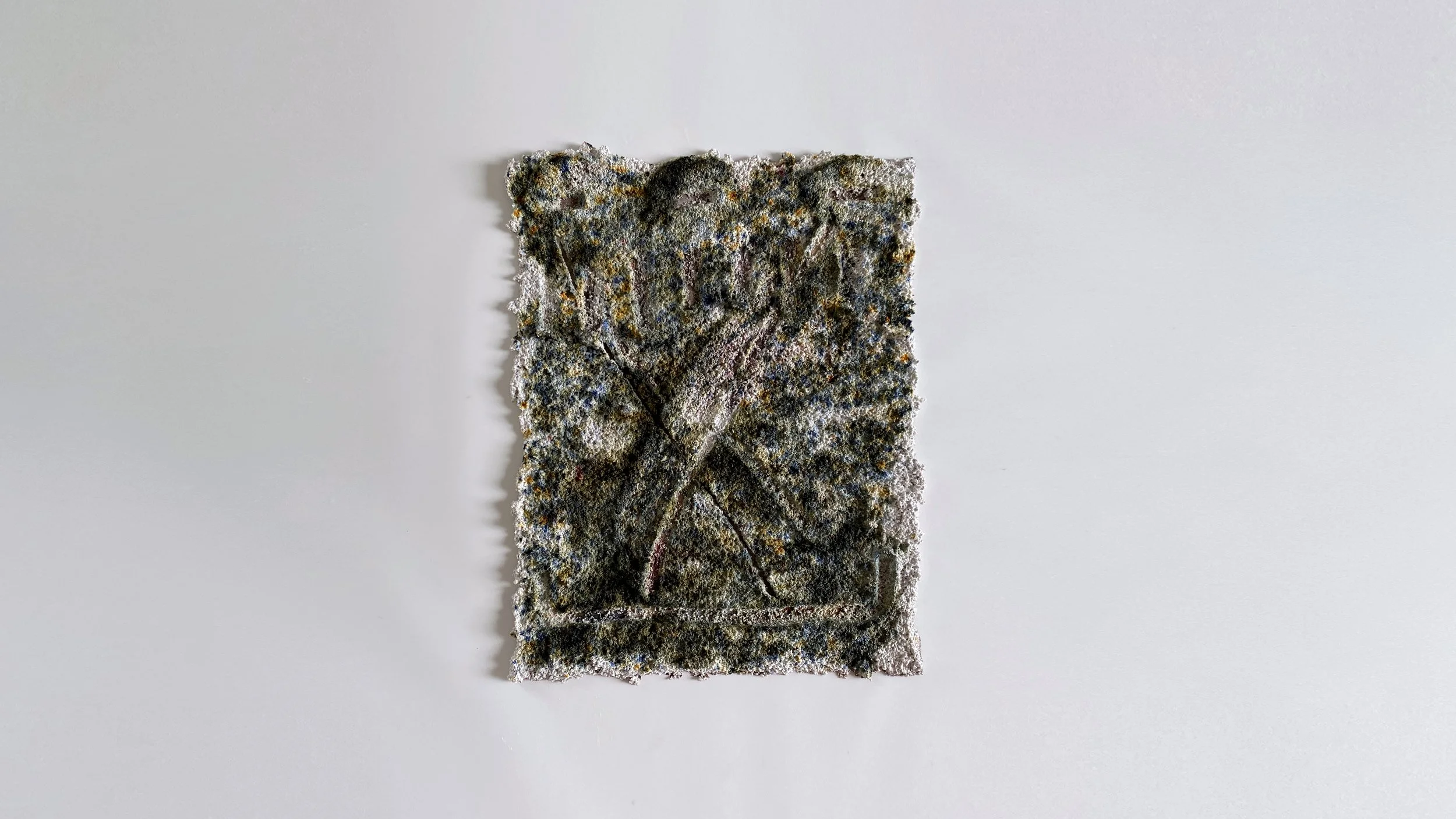
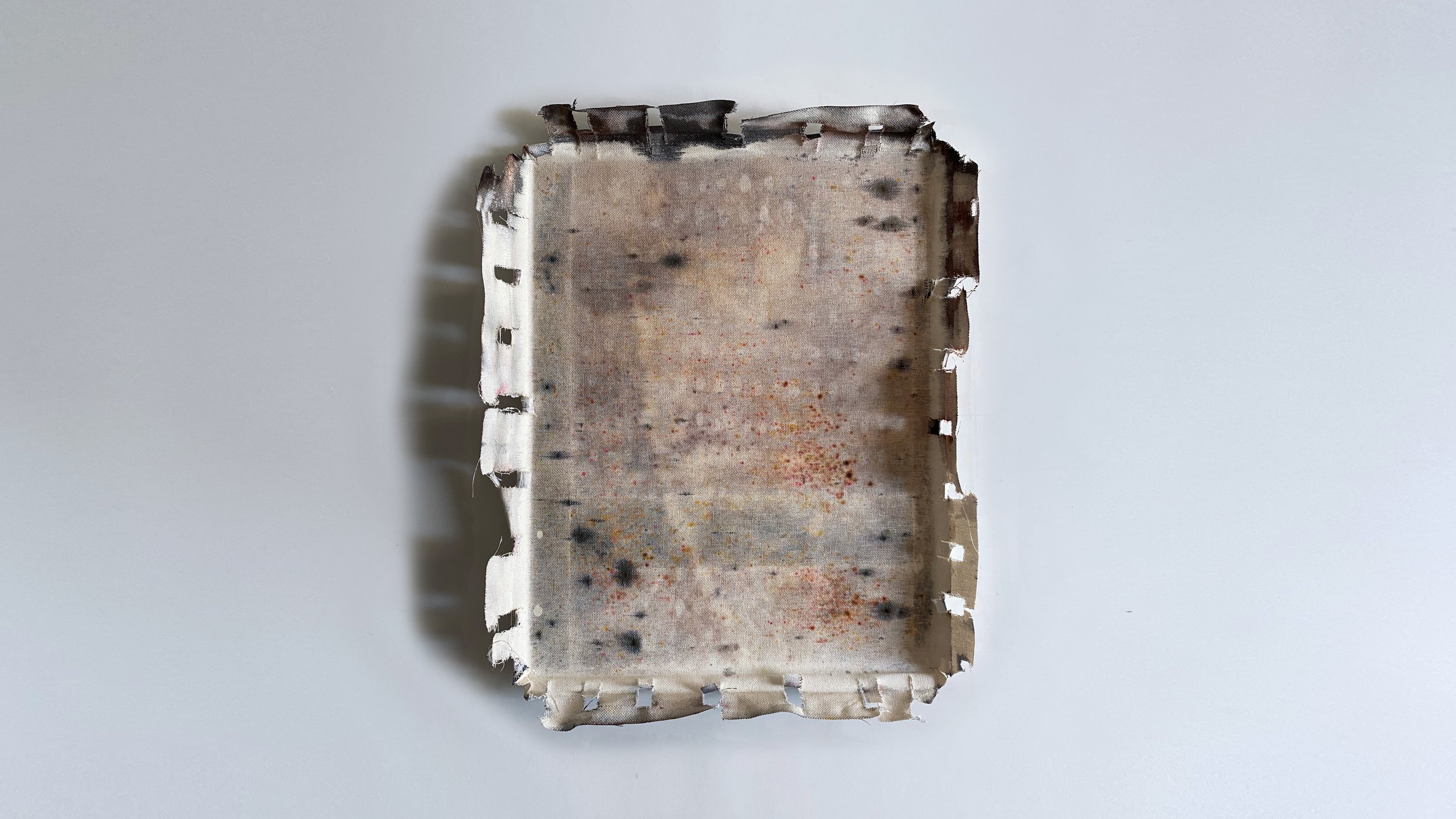
A: Point Zero — Cast Baseline Set
Closed material experiment establishing baseline conditions
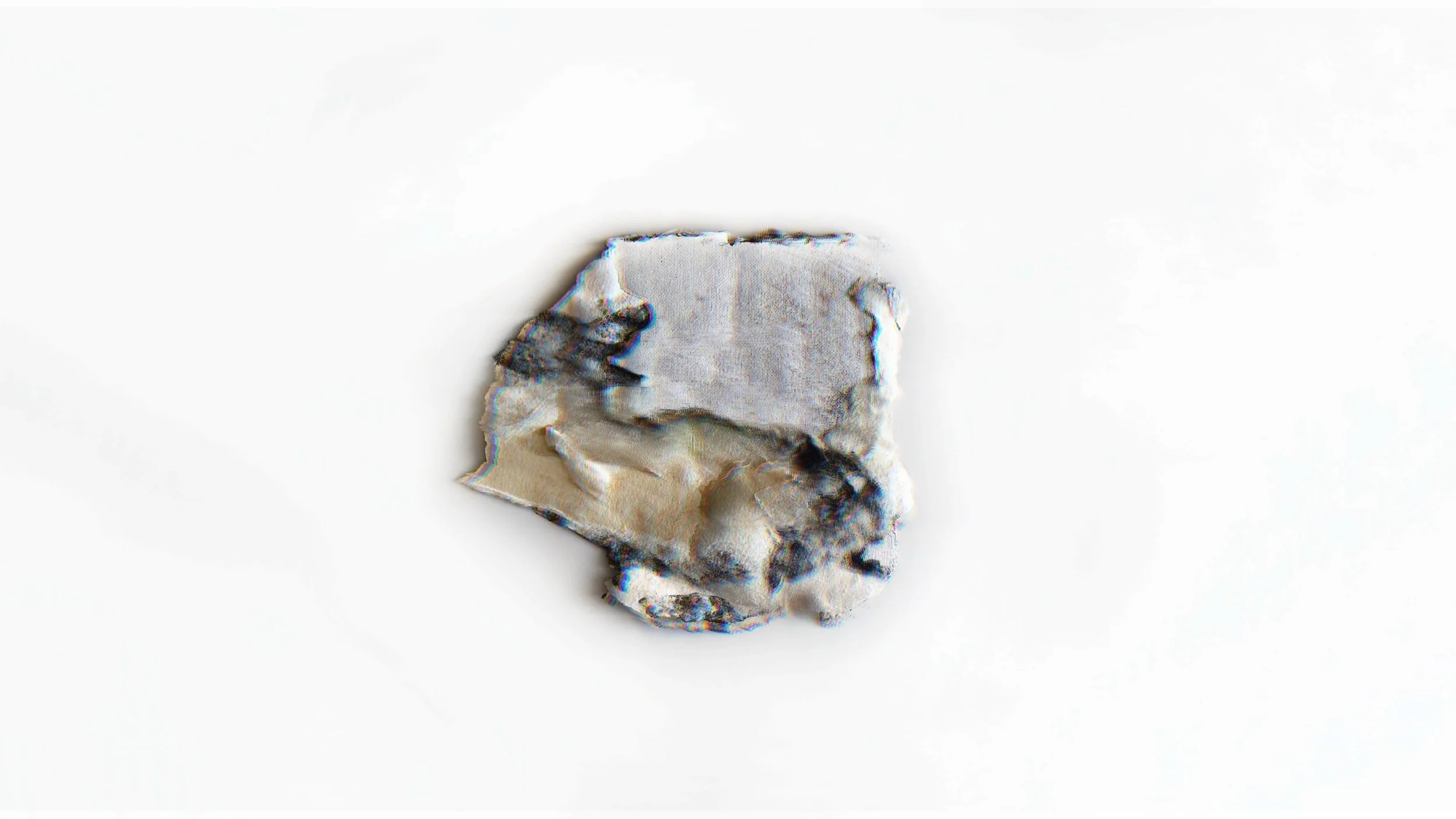
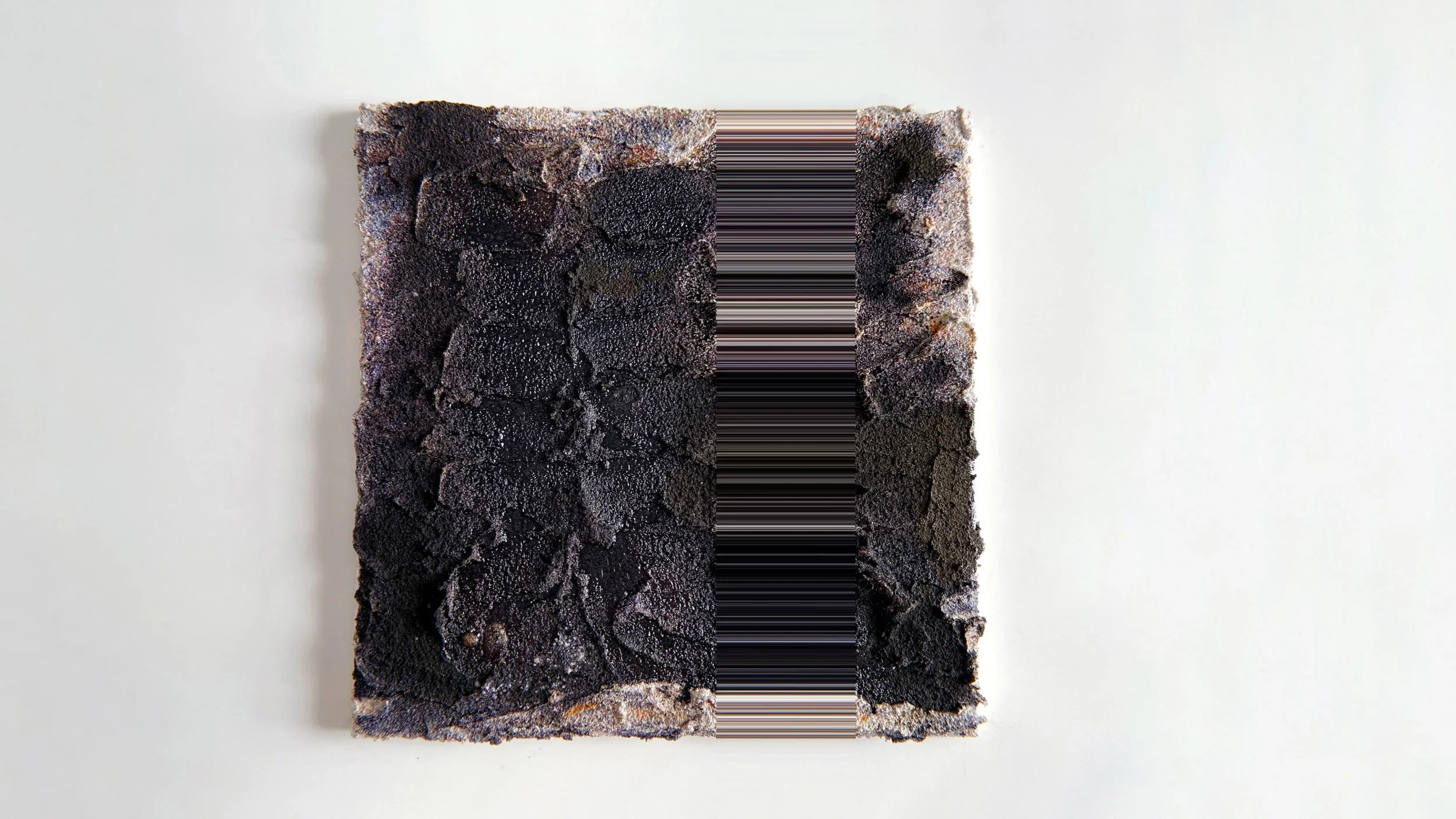
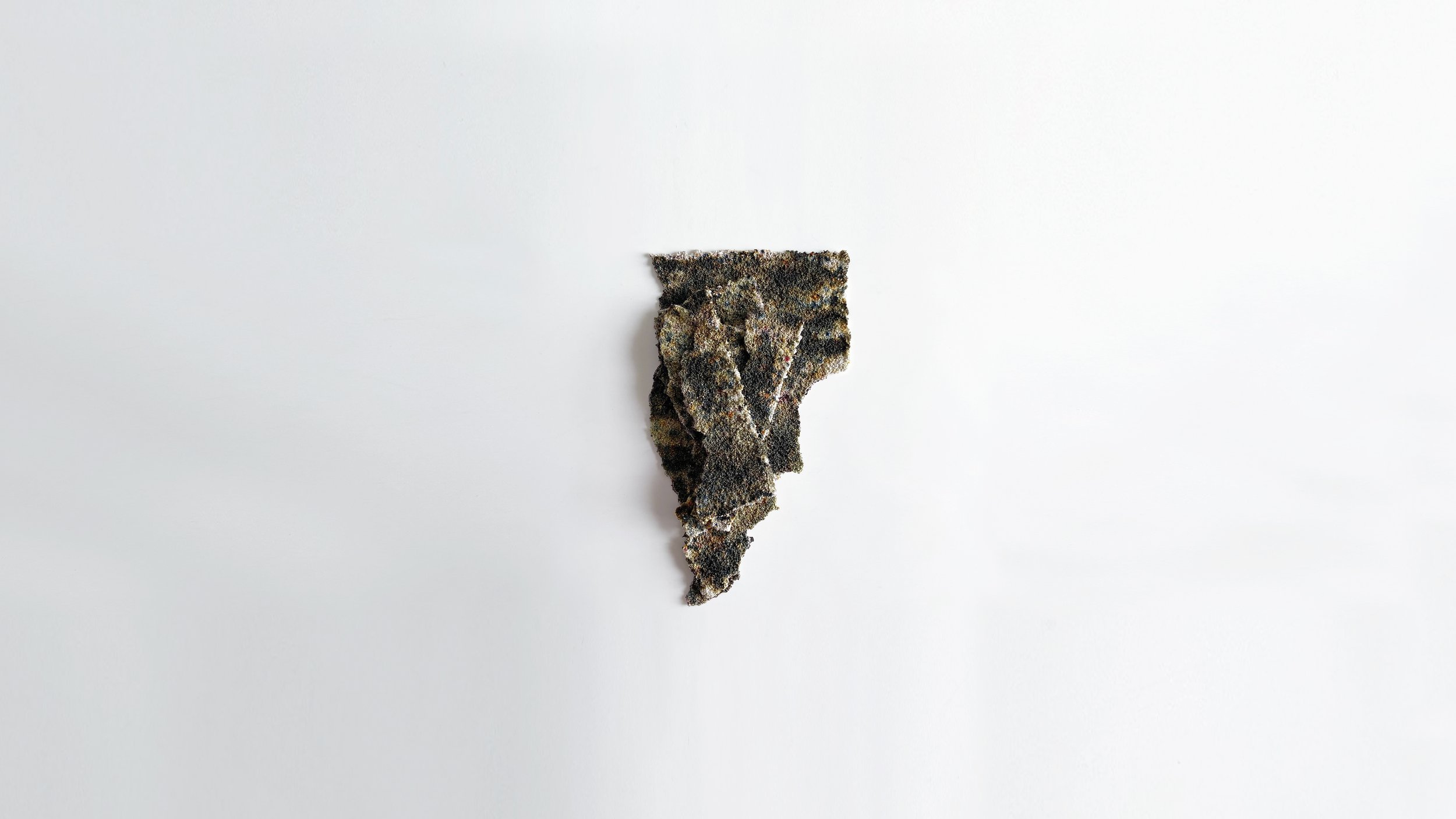
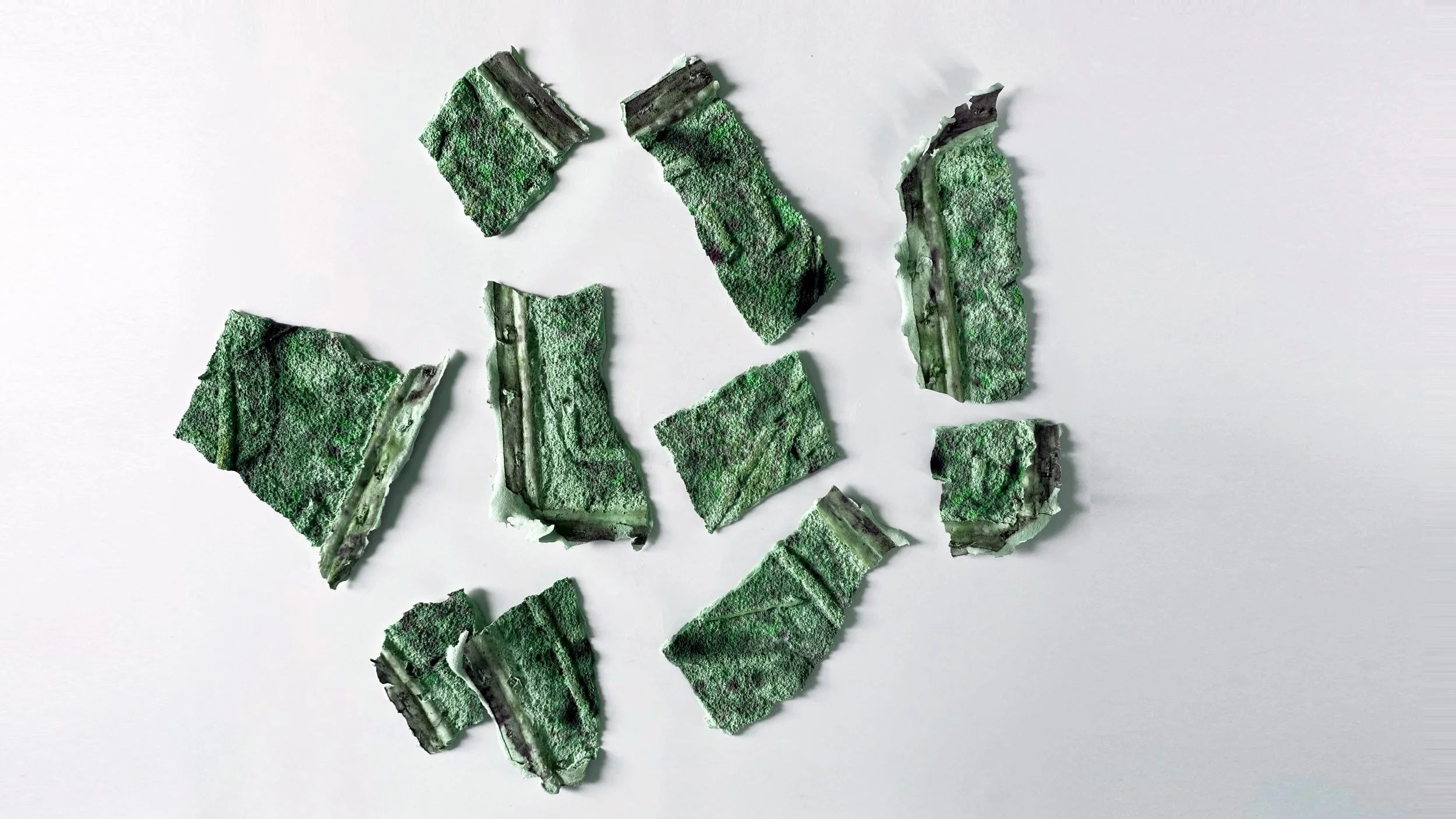
A bounded experiment in which a cast surface is subjected to sequential physical actions—casting, removing, peeling, tearing, piling, and fragmenting—until discrete form breaks down into a distributed field. This set establishes the baseline material conditions from which subsequent reactivations and temporal behaviors emerge.
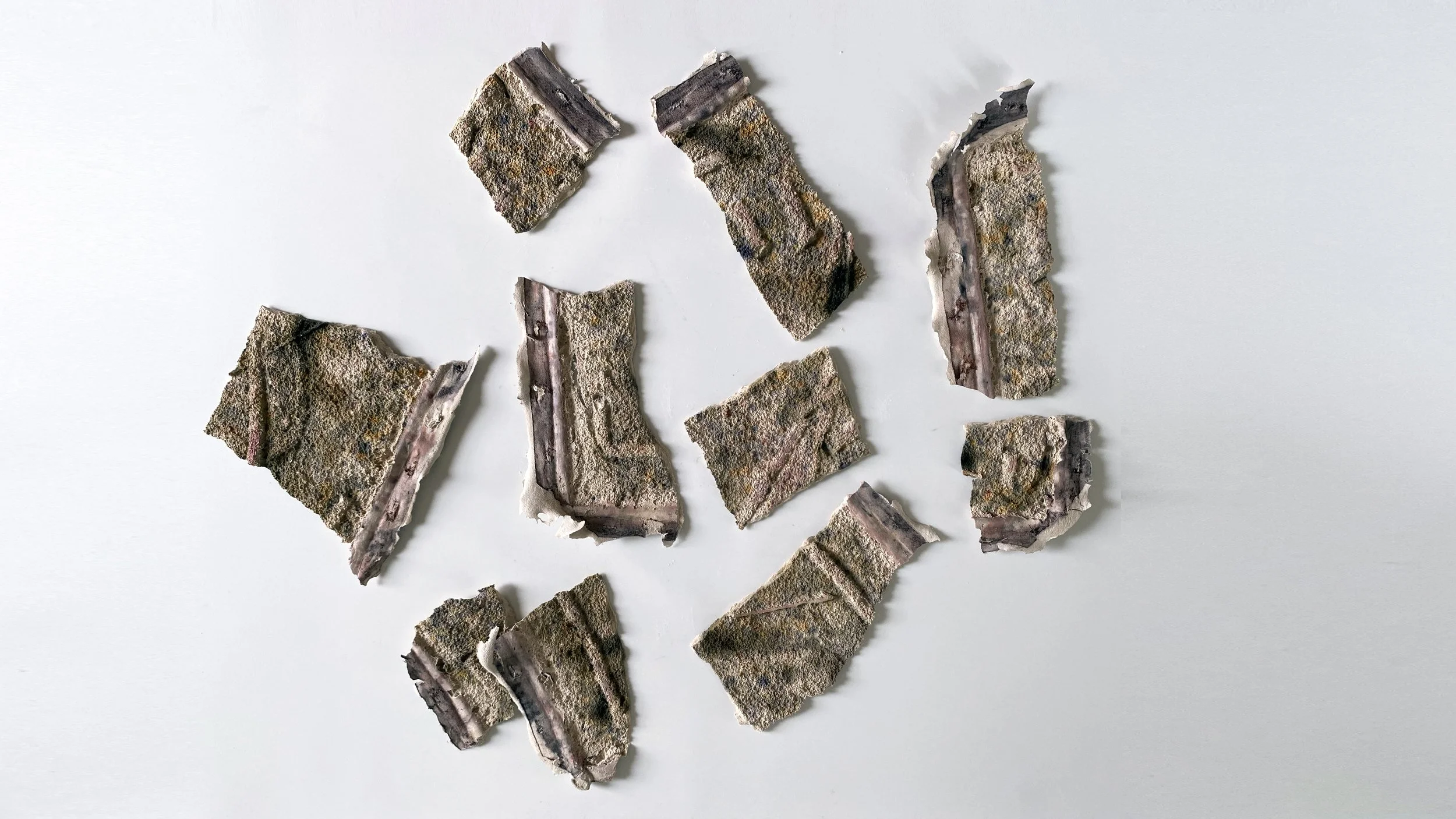
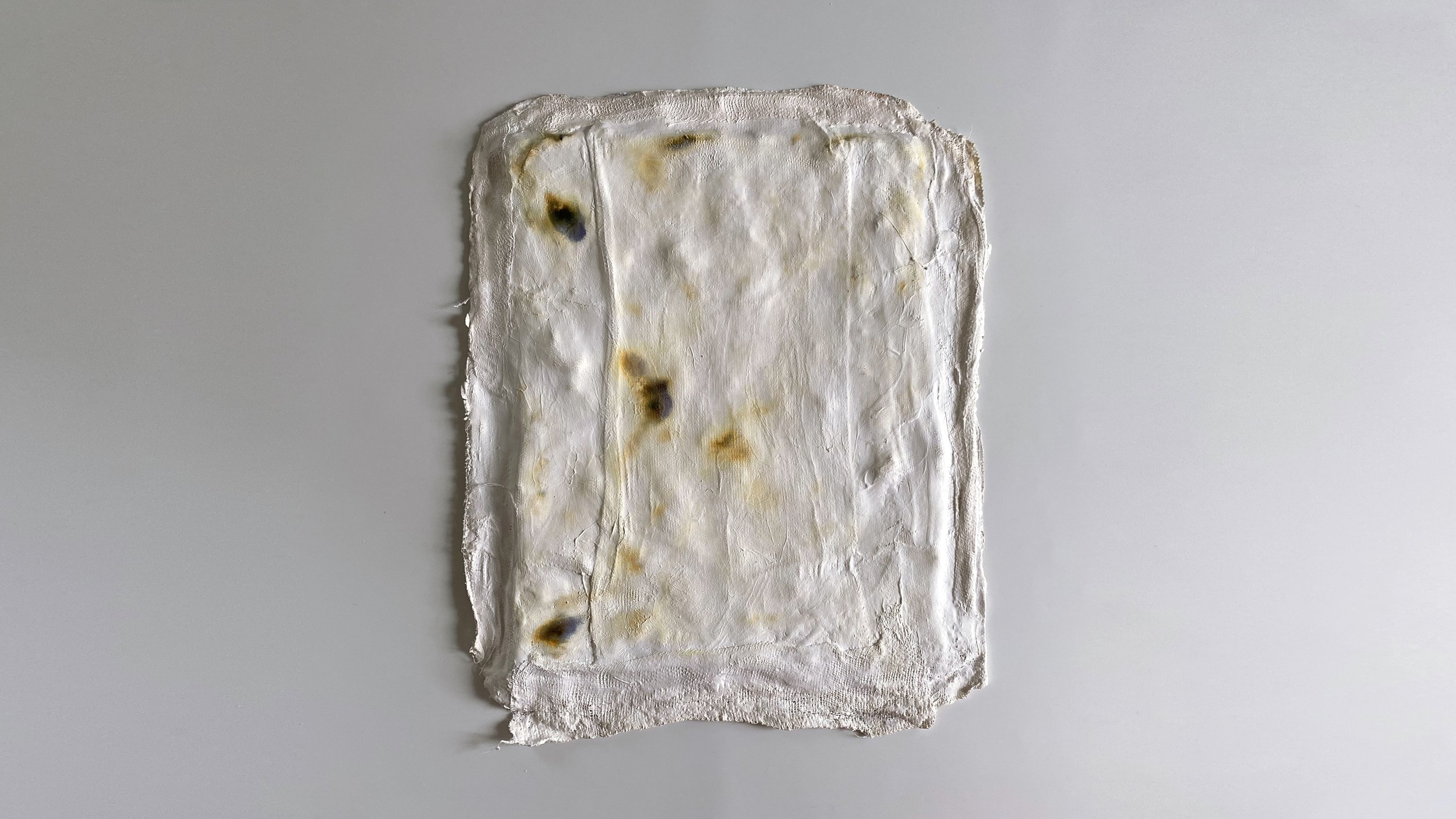
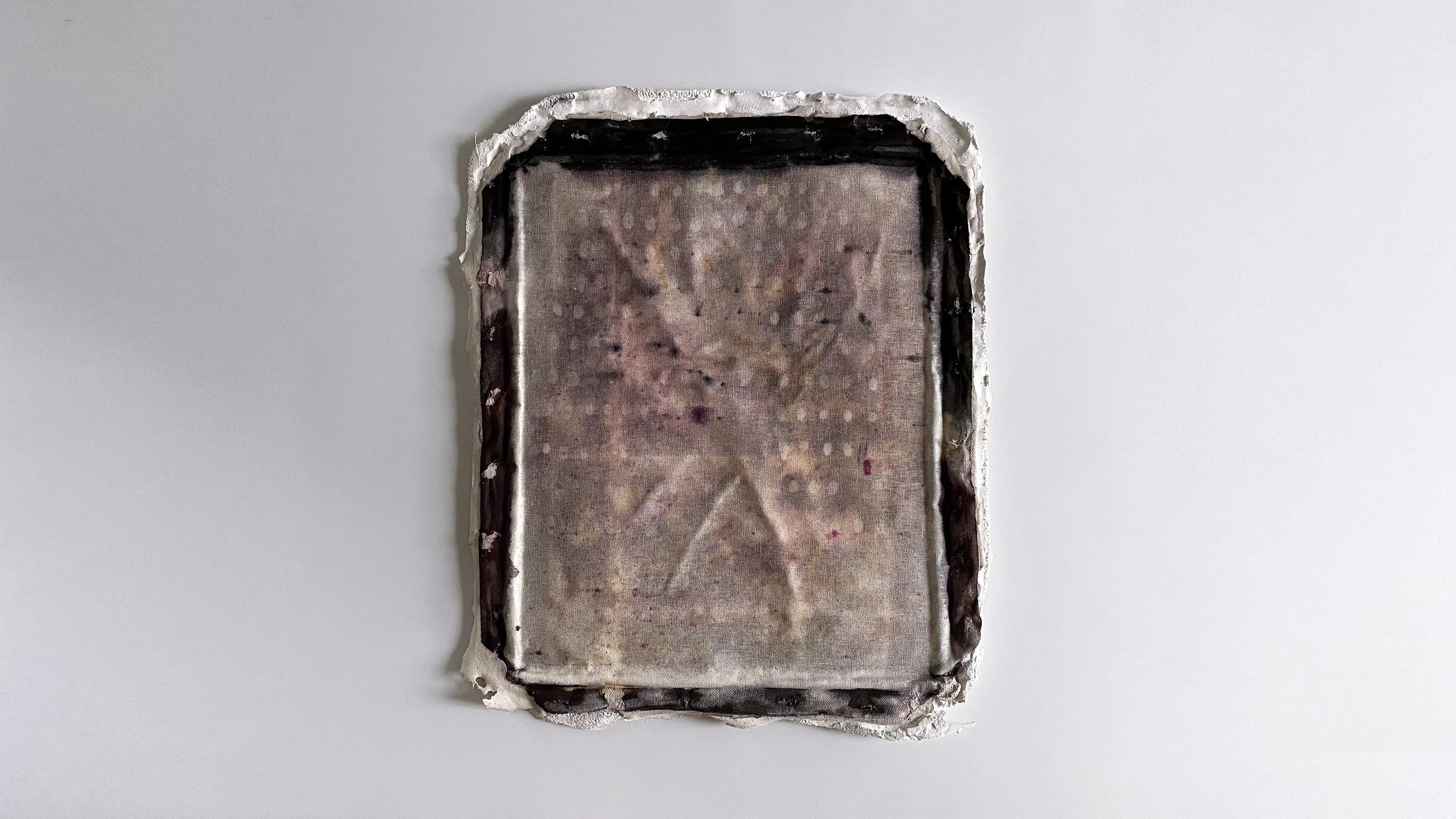
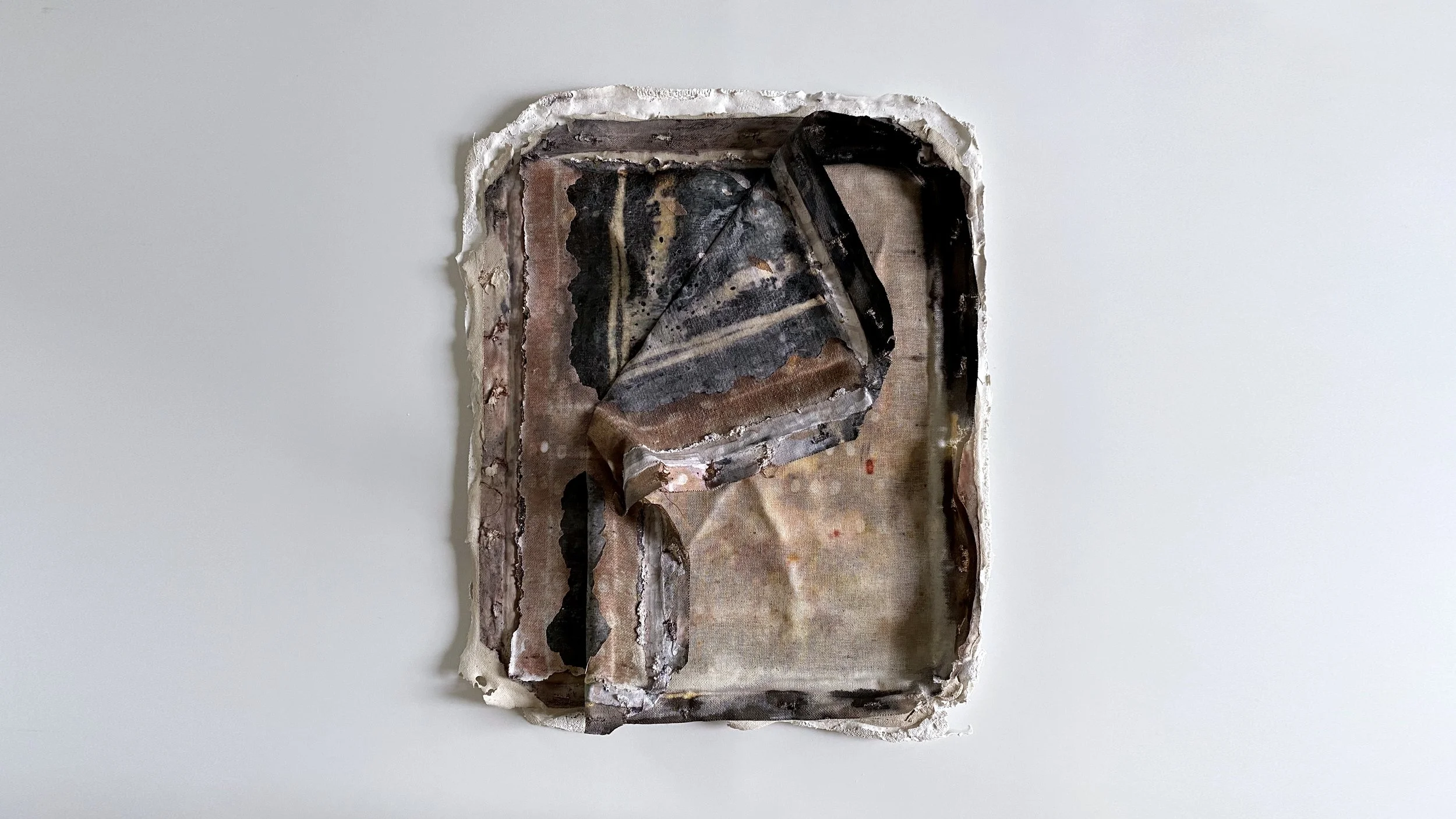
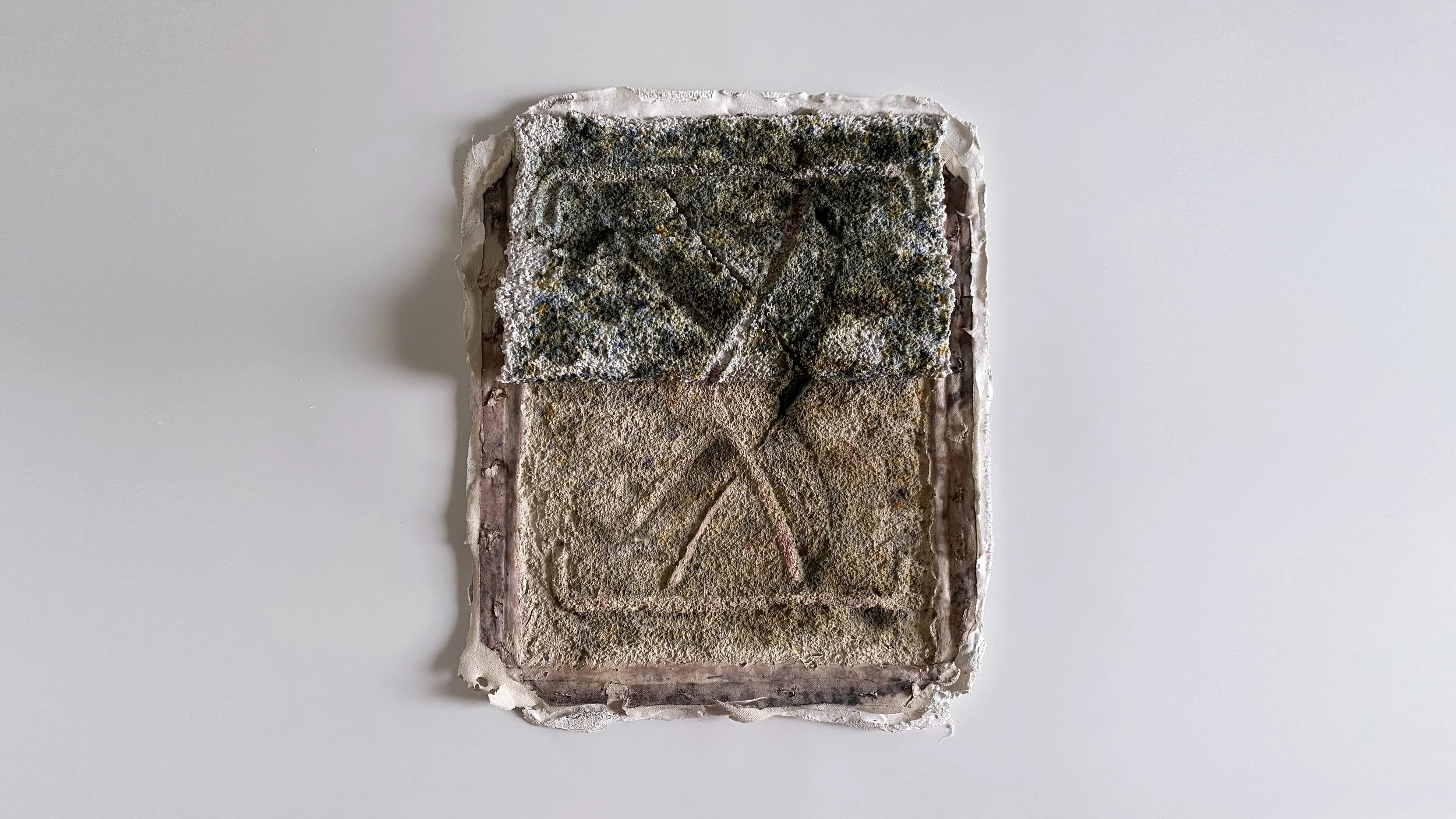
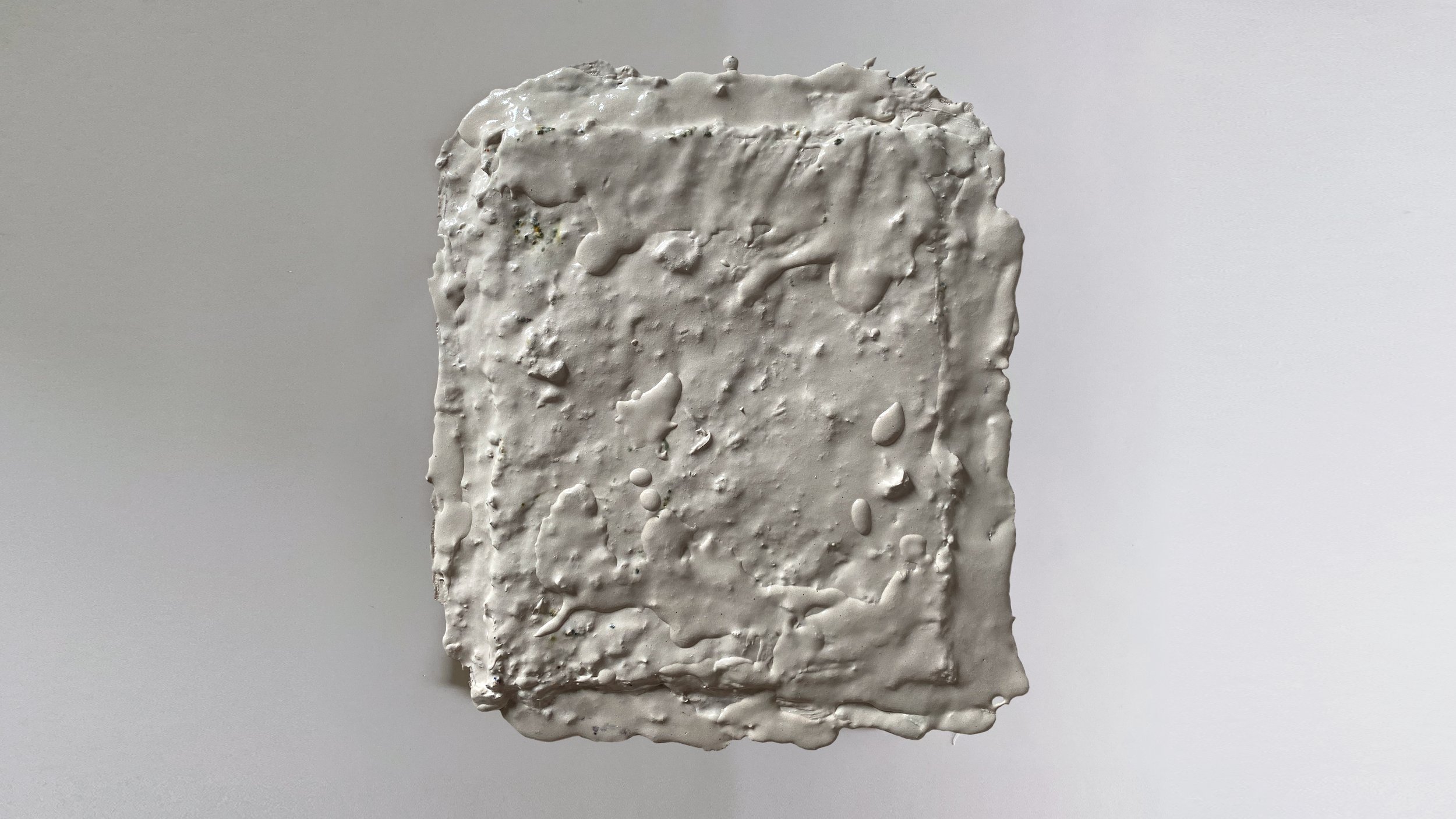
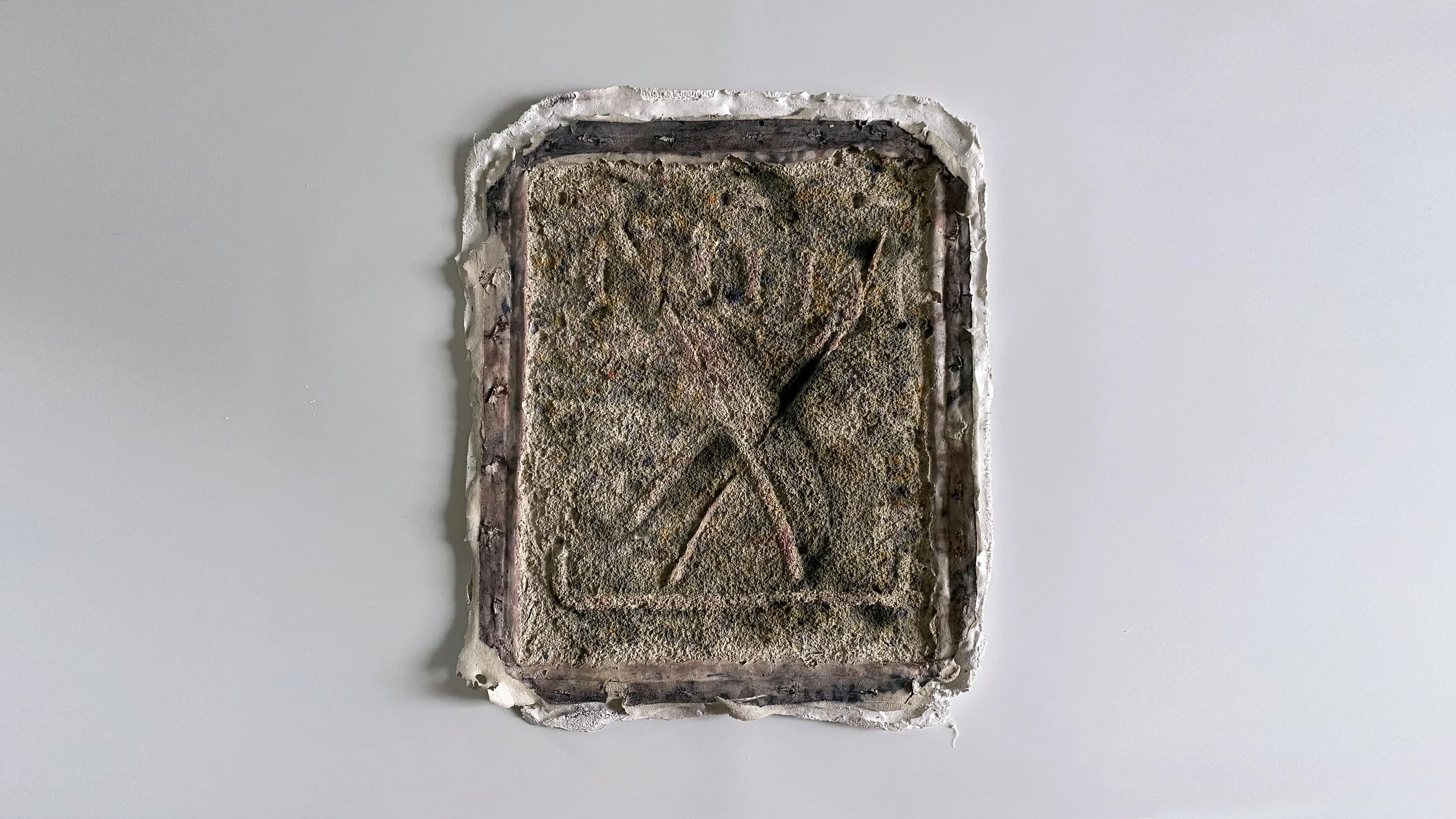
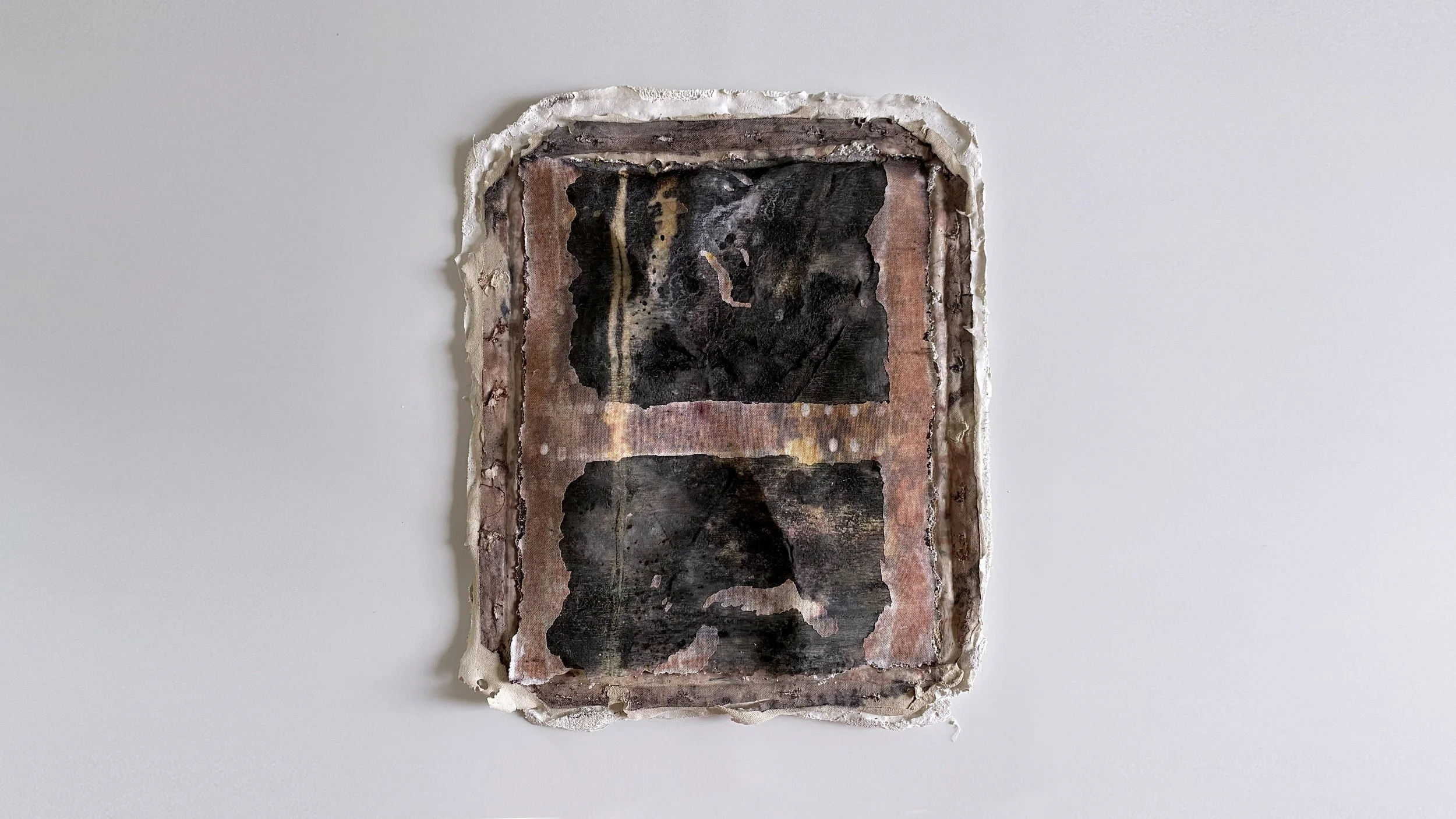
B: Residue Reactivations
Digital reactivation of material residue as still image conditions
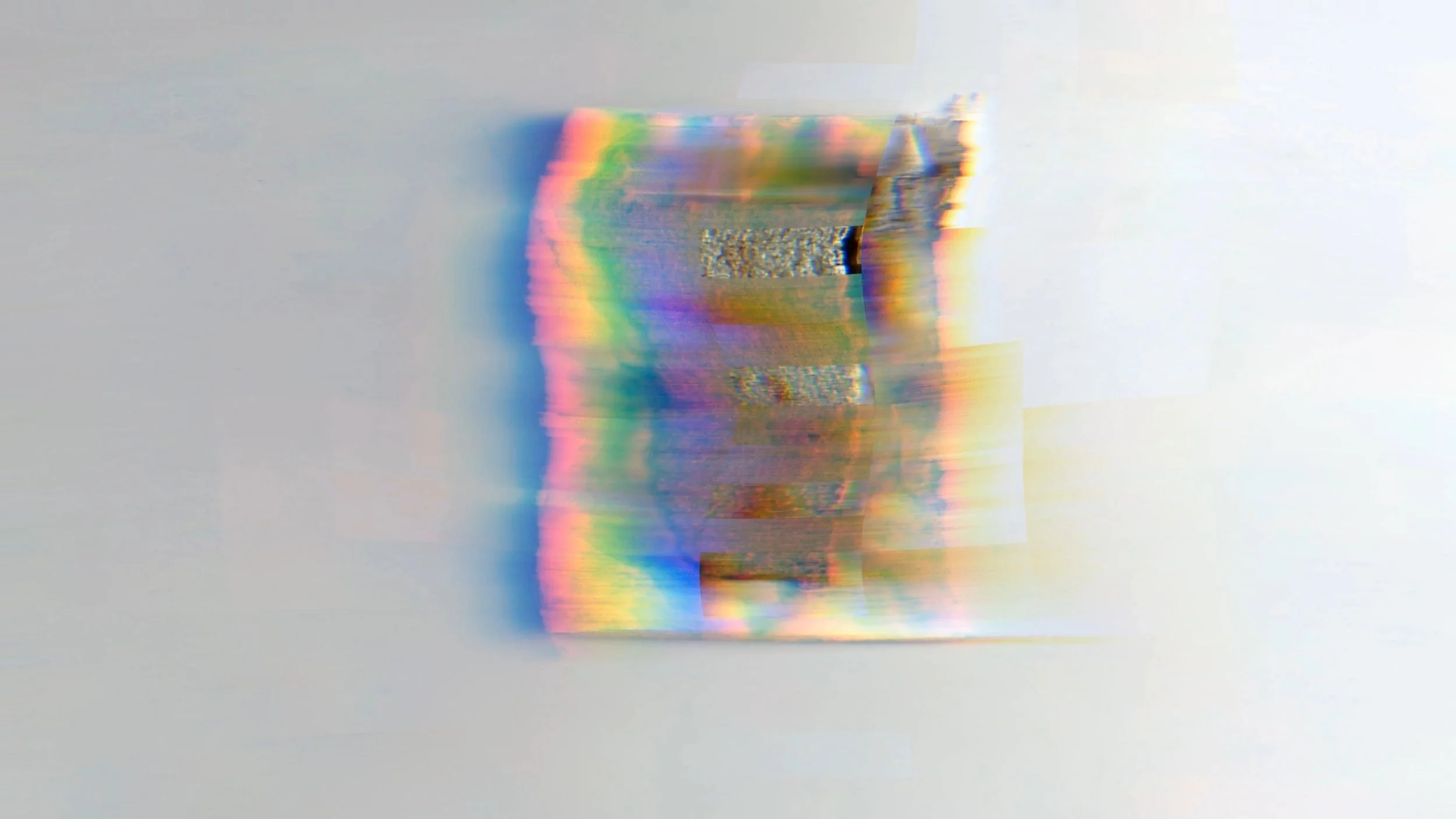
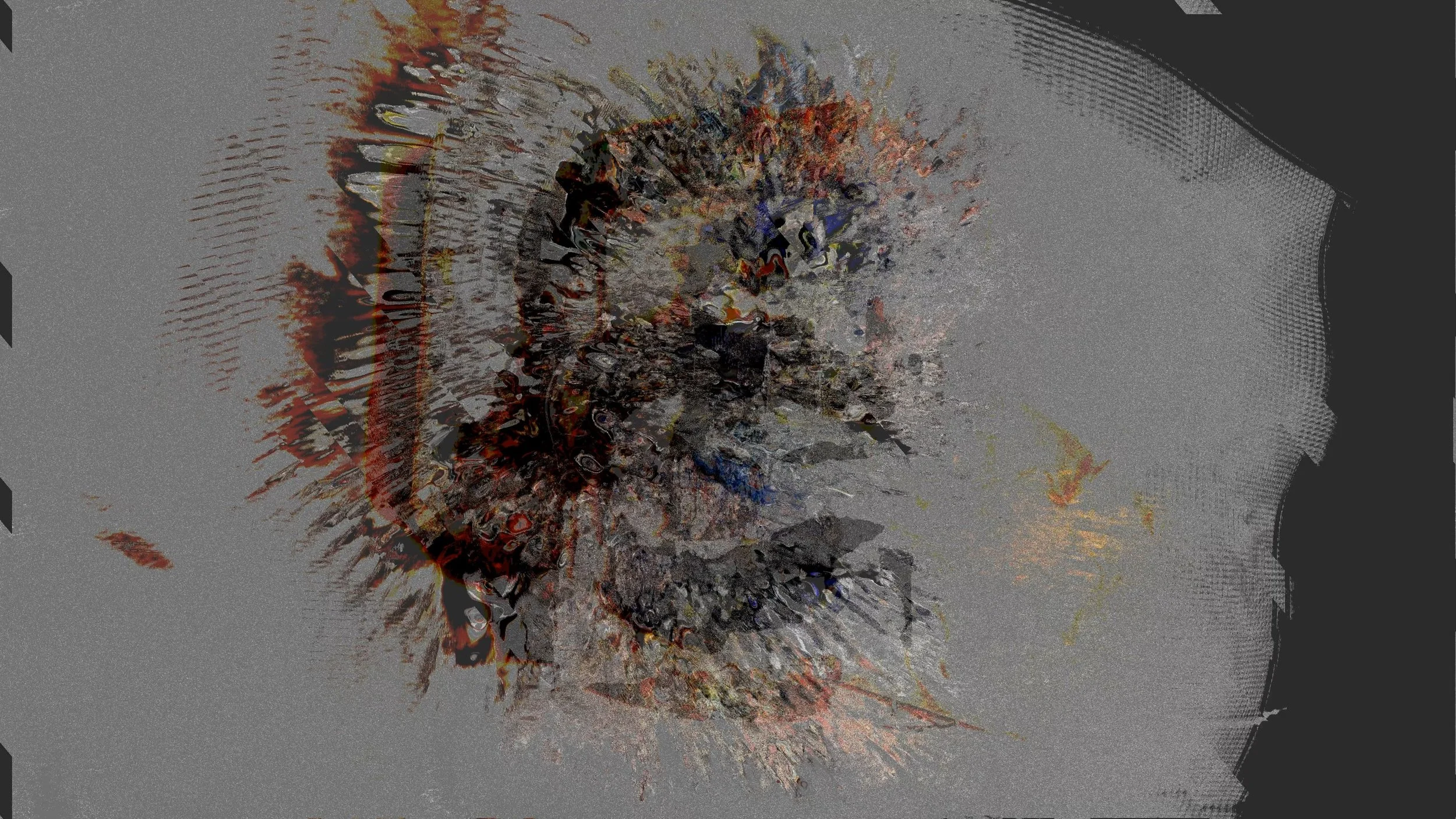
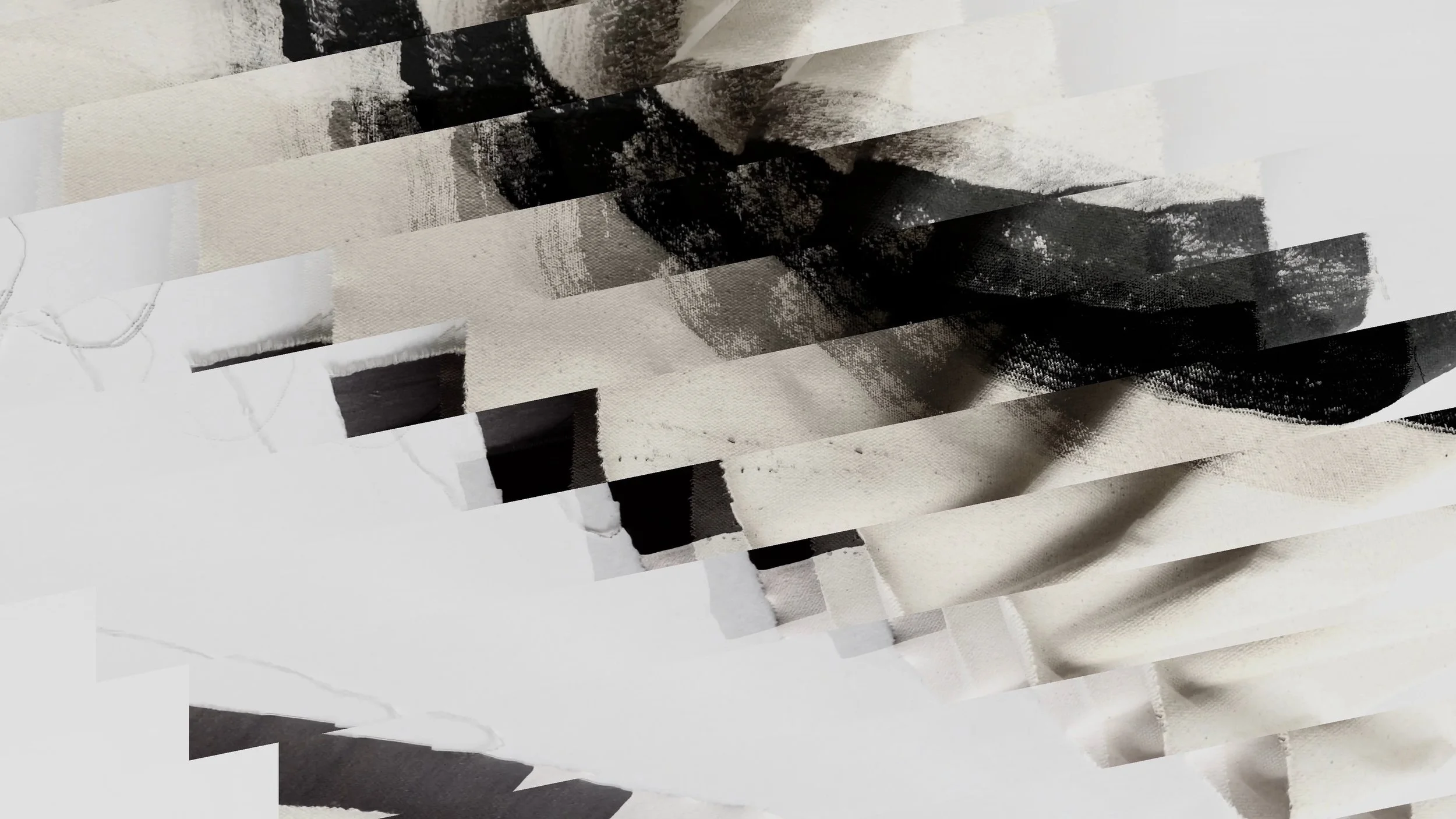
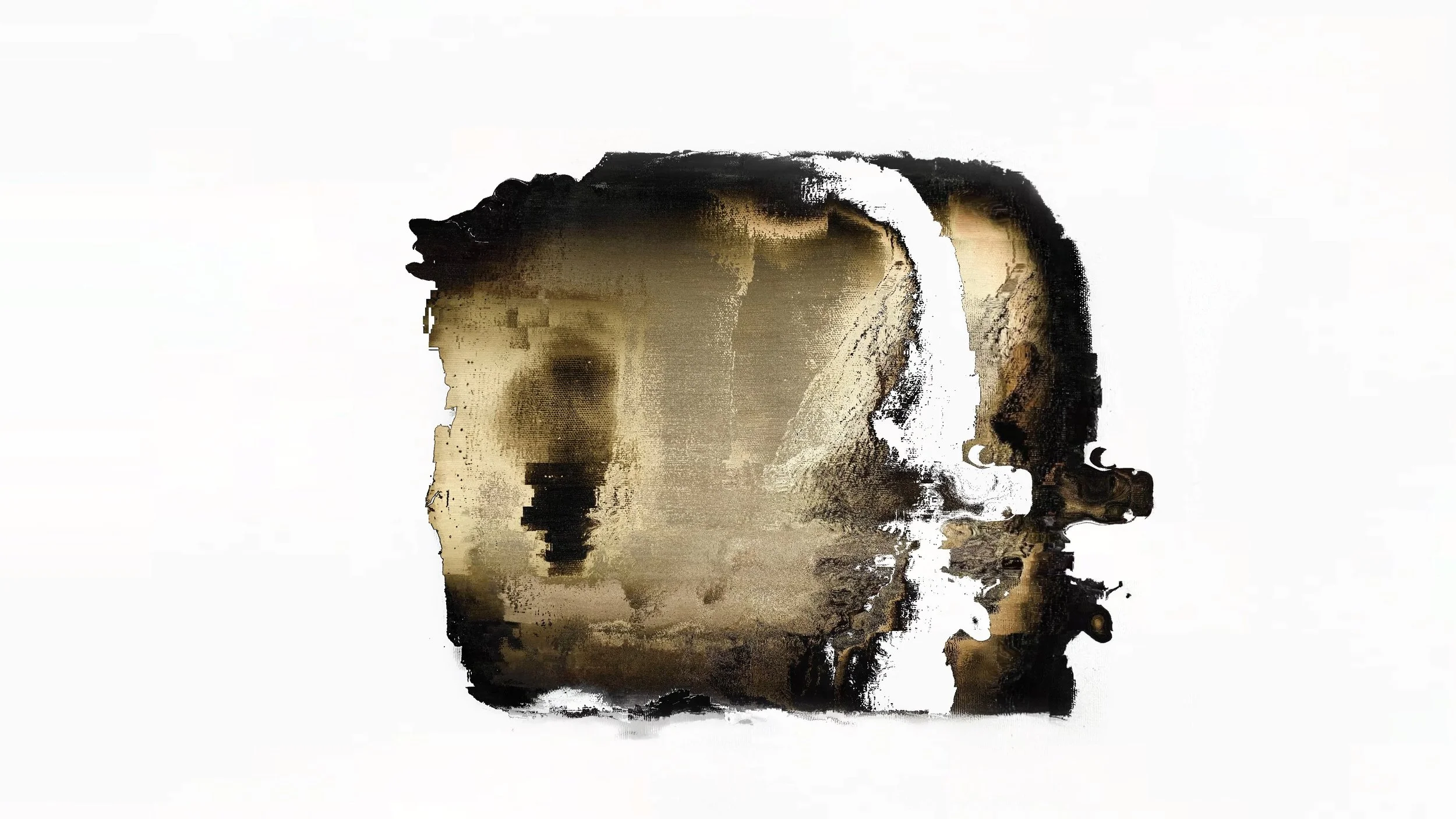
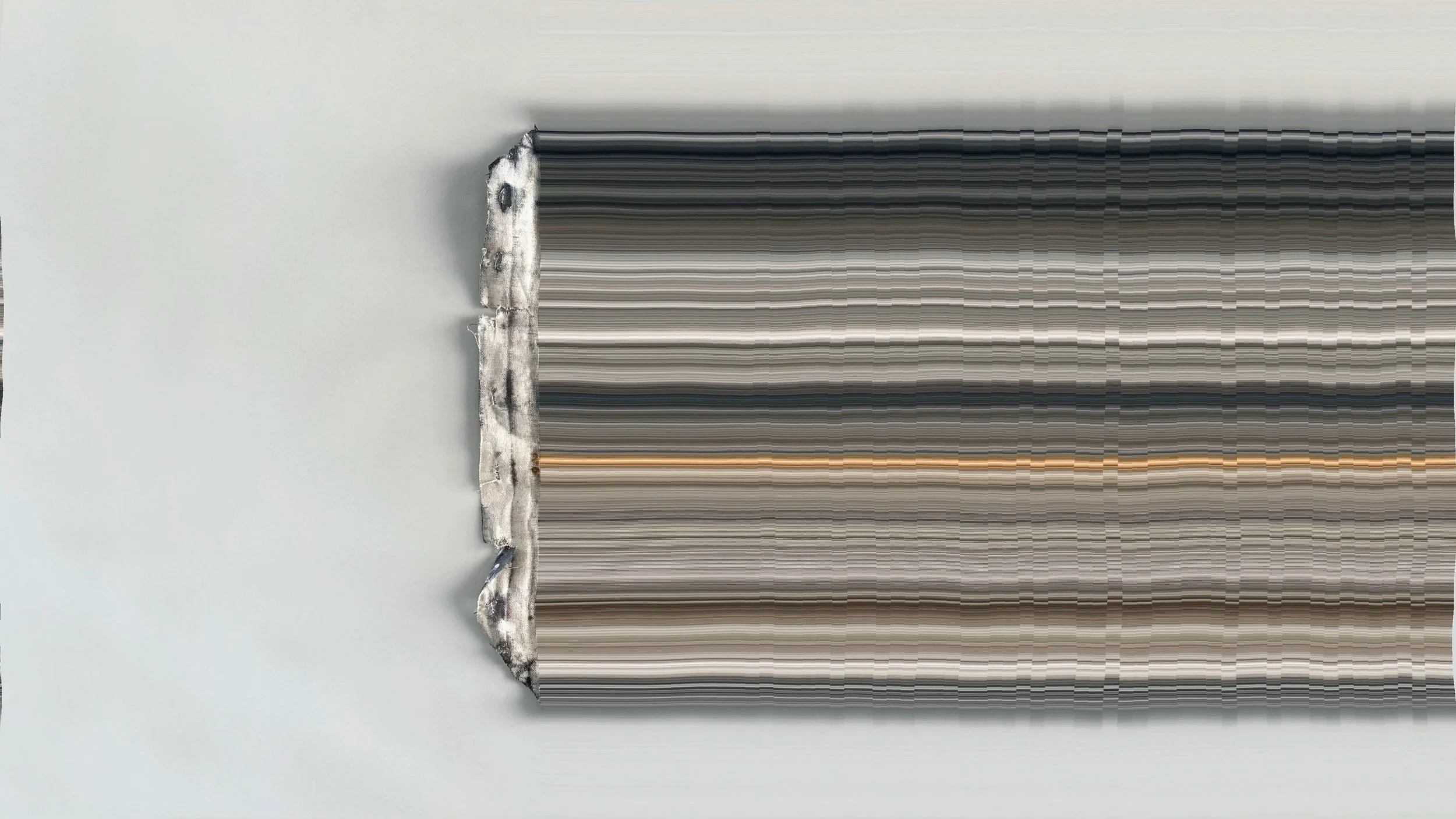
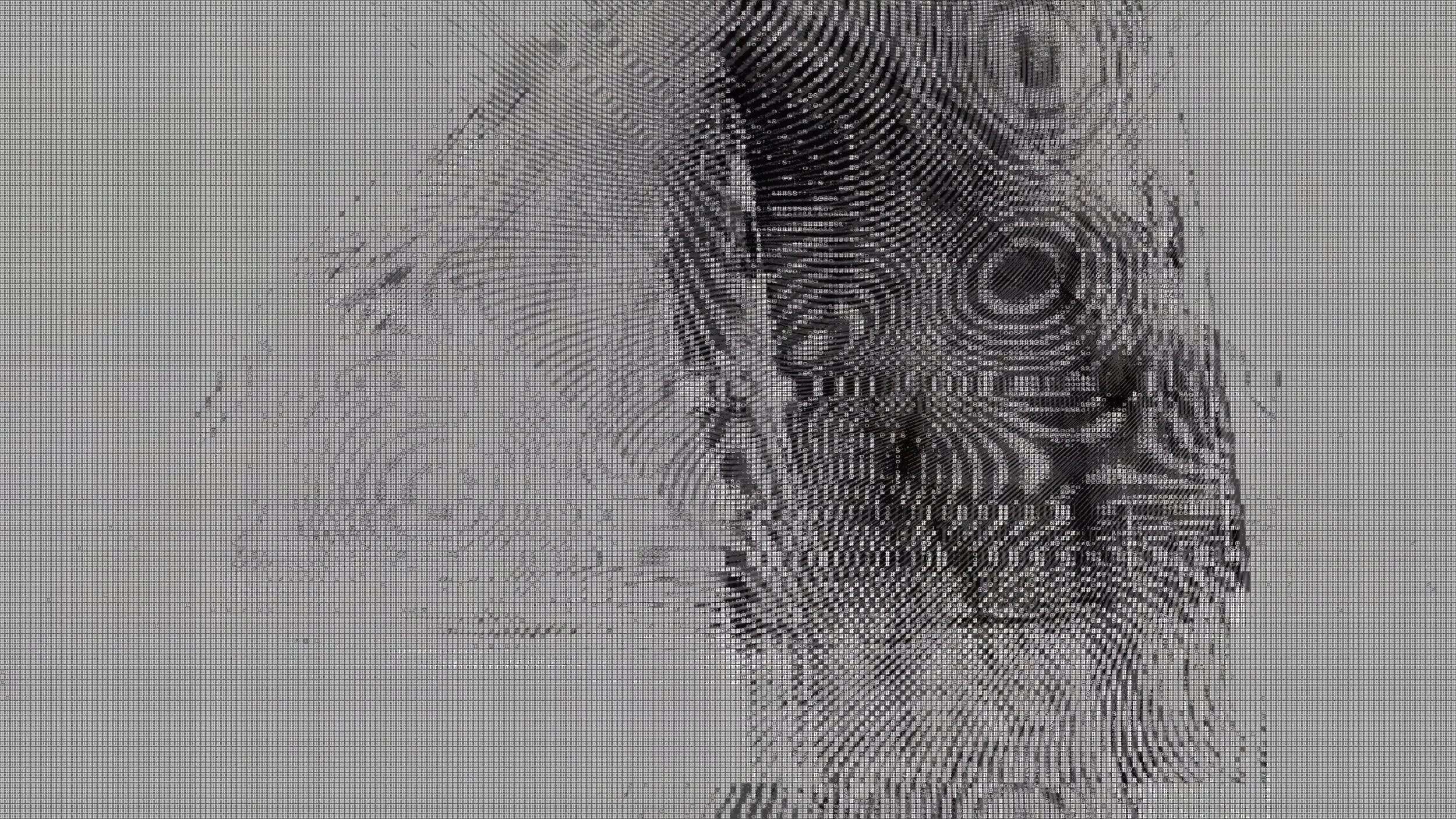
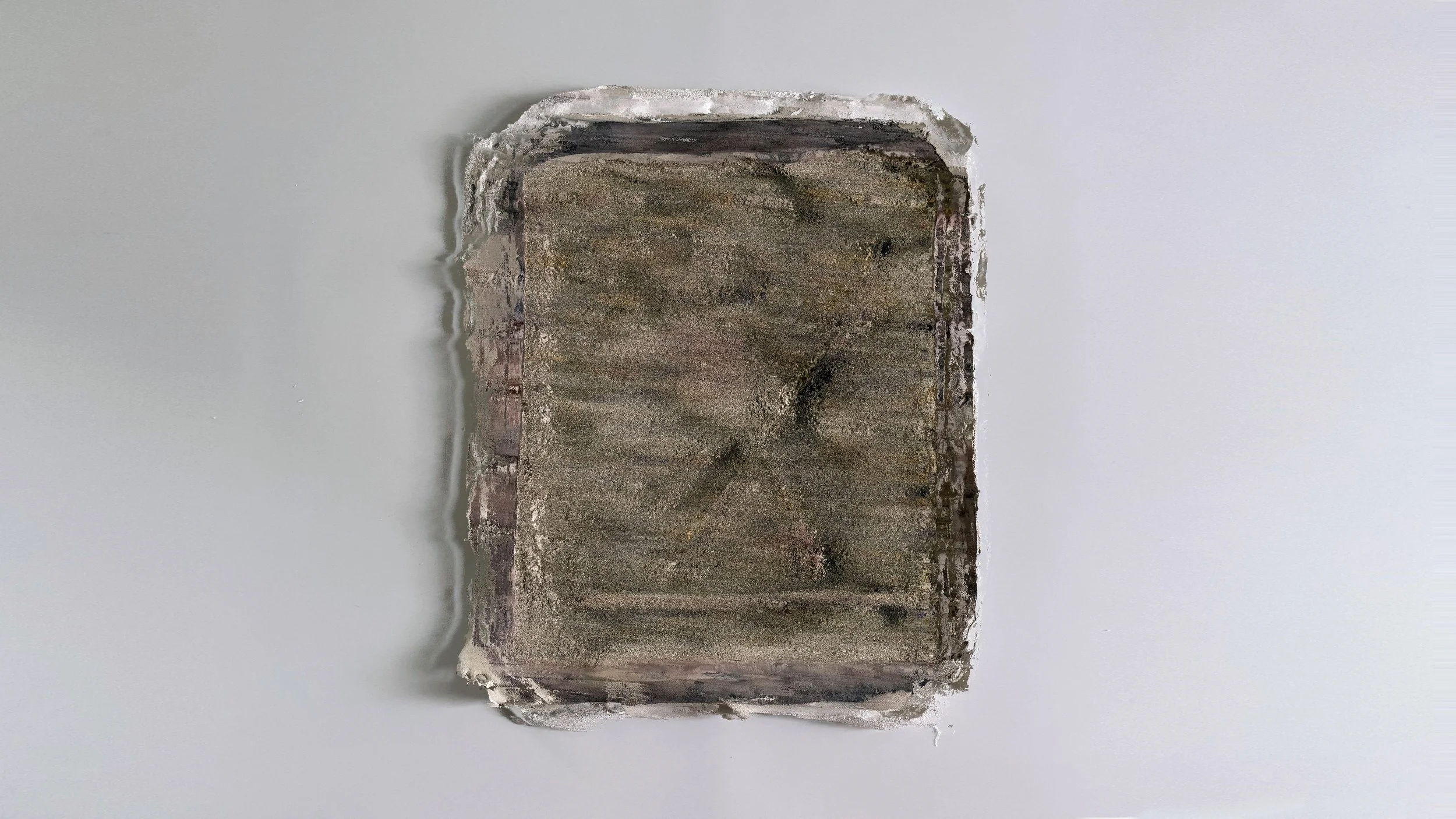
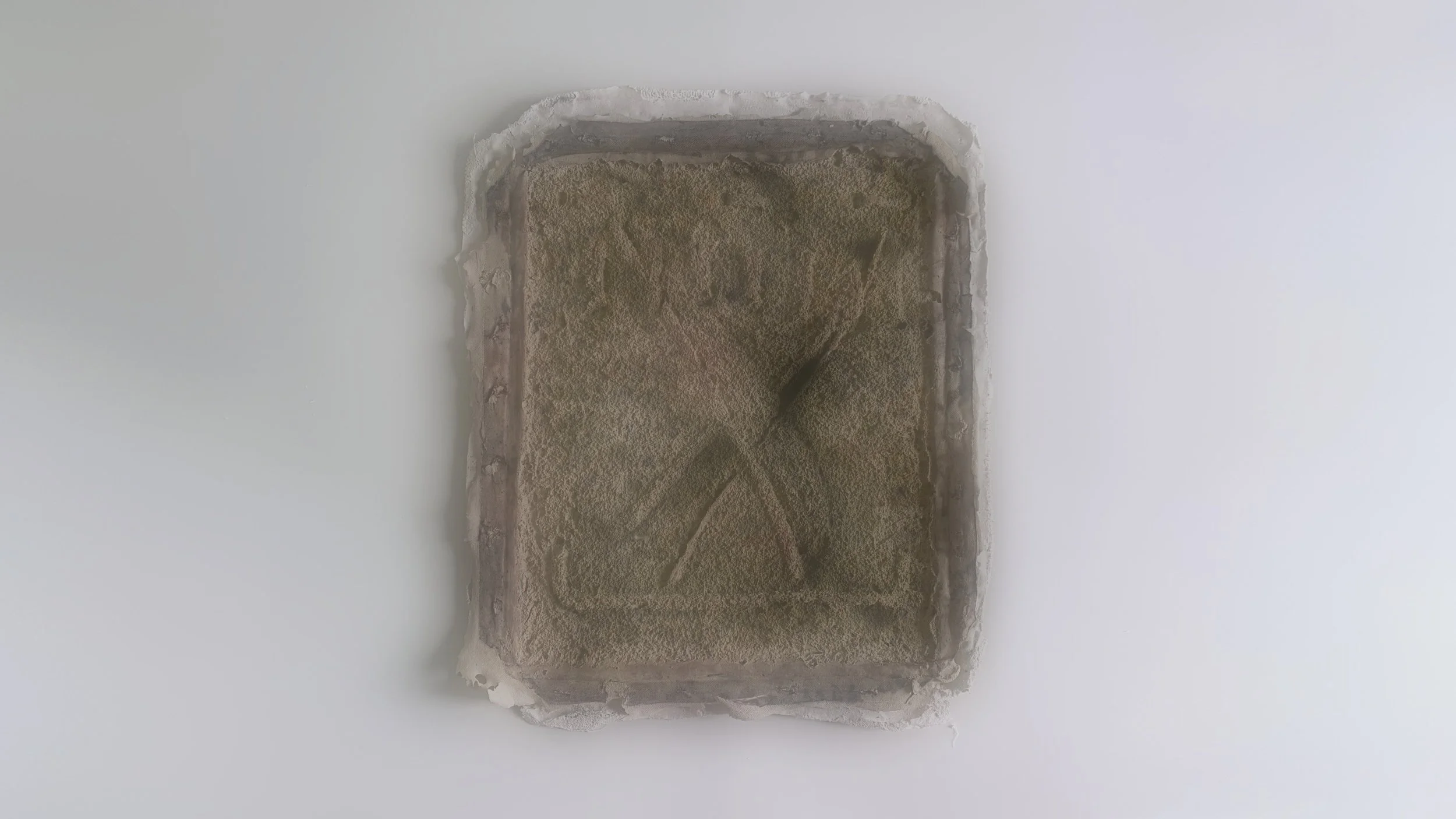
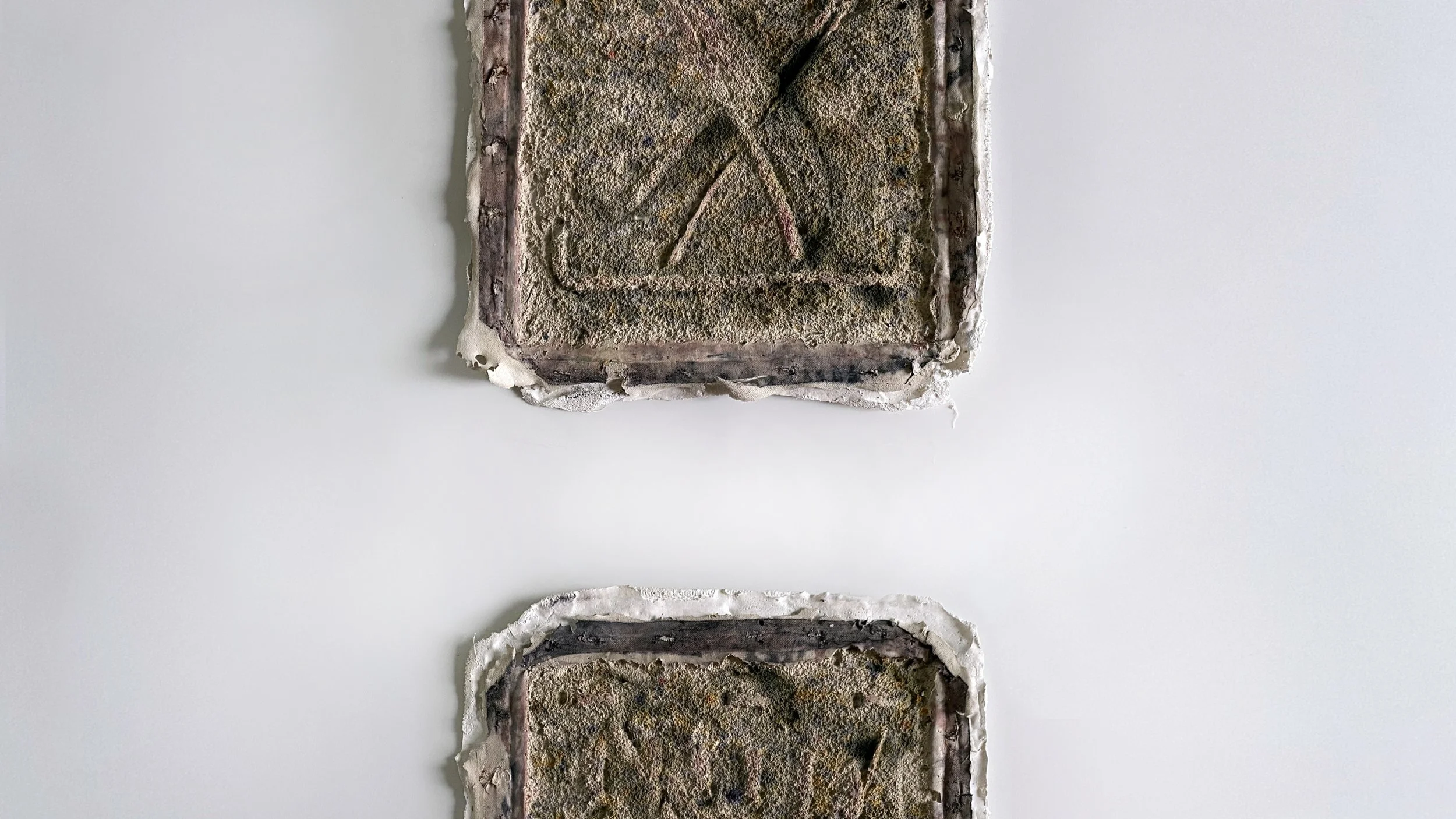
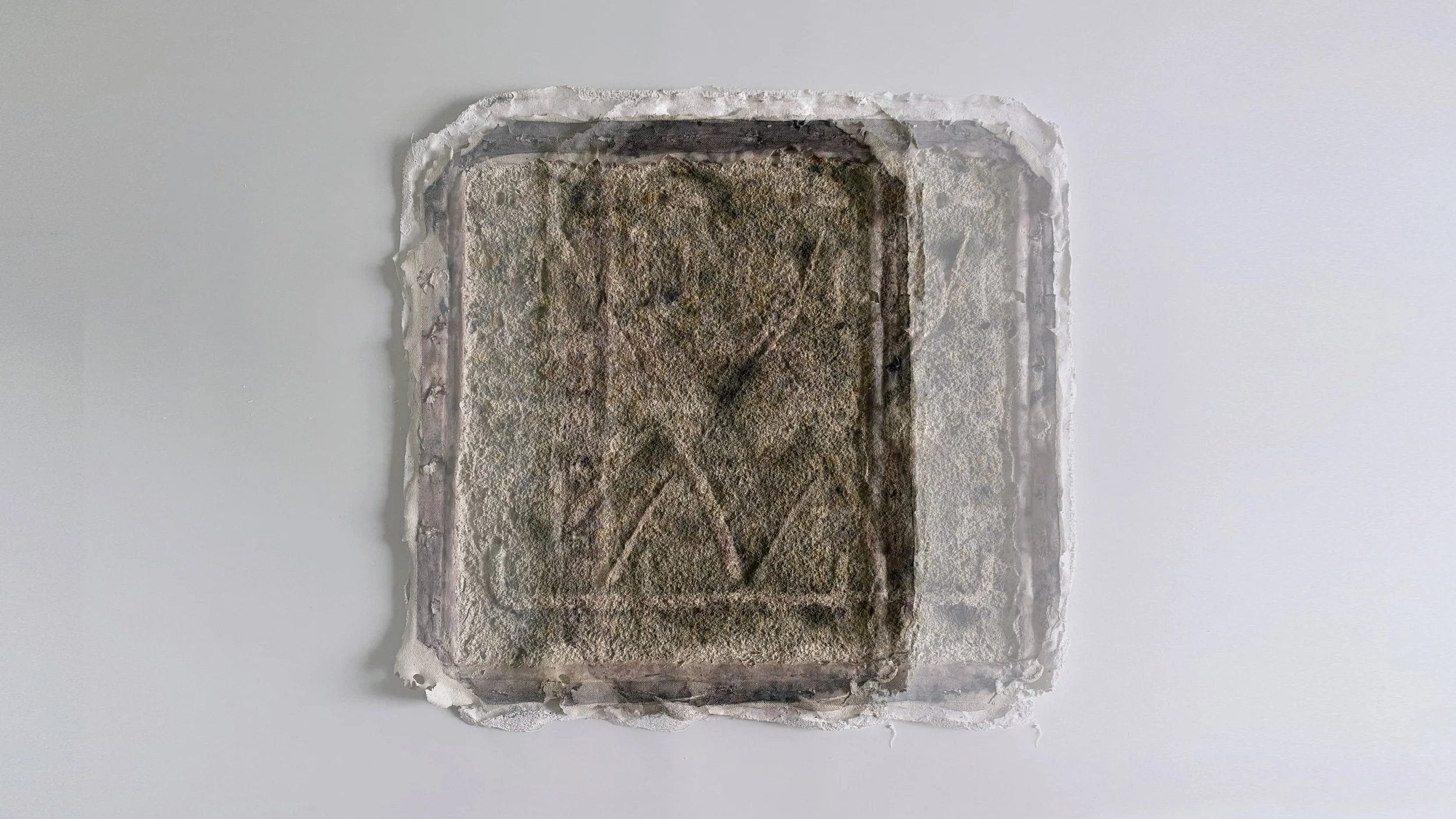
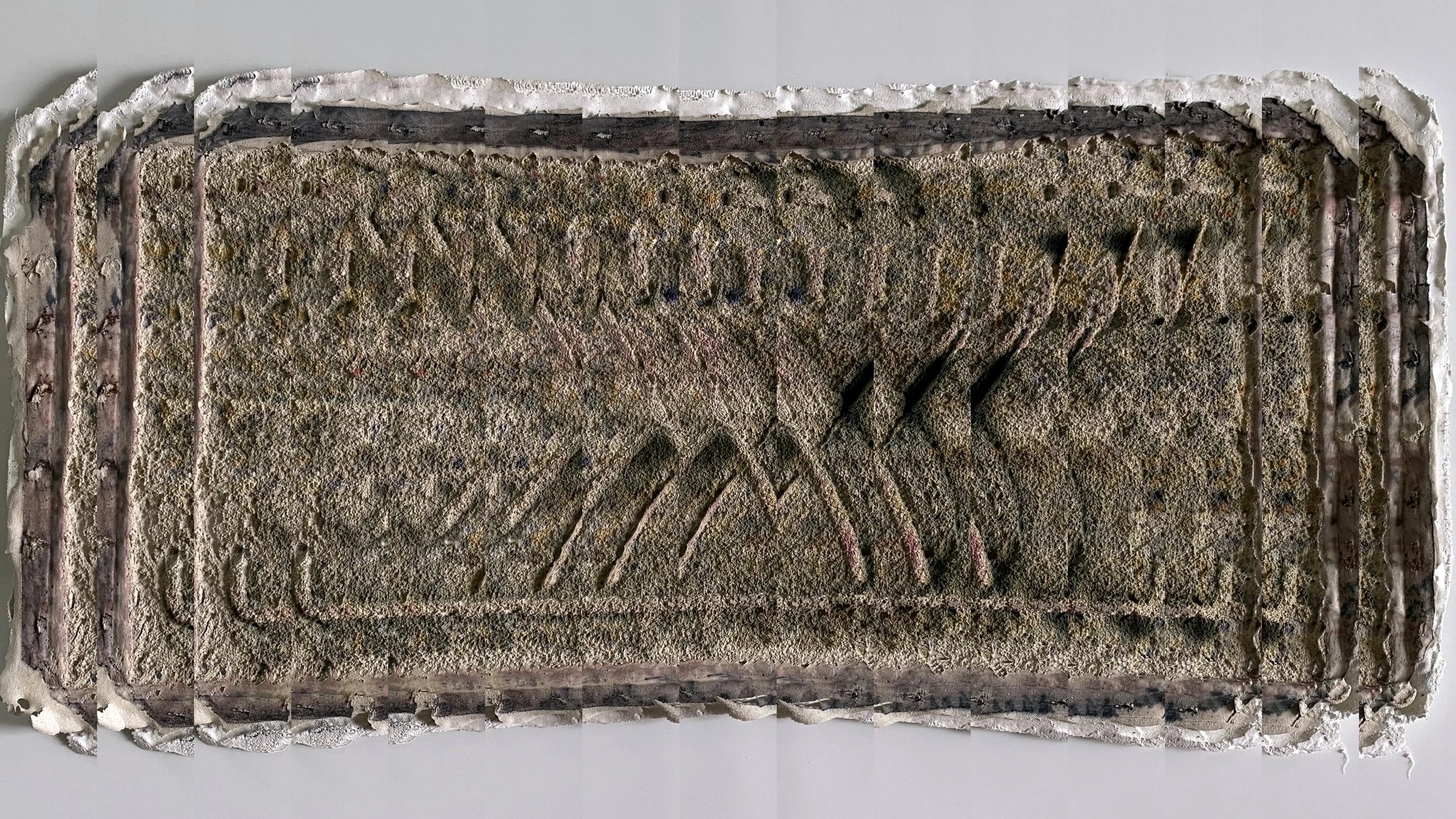
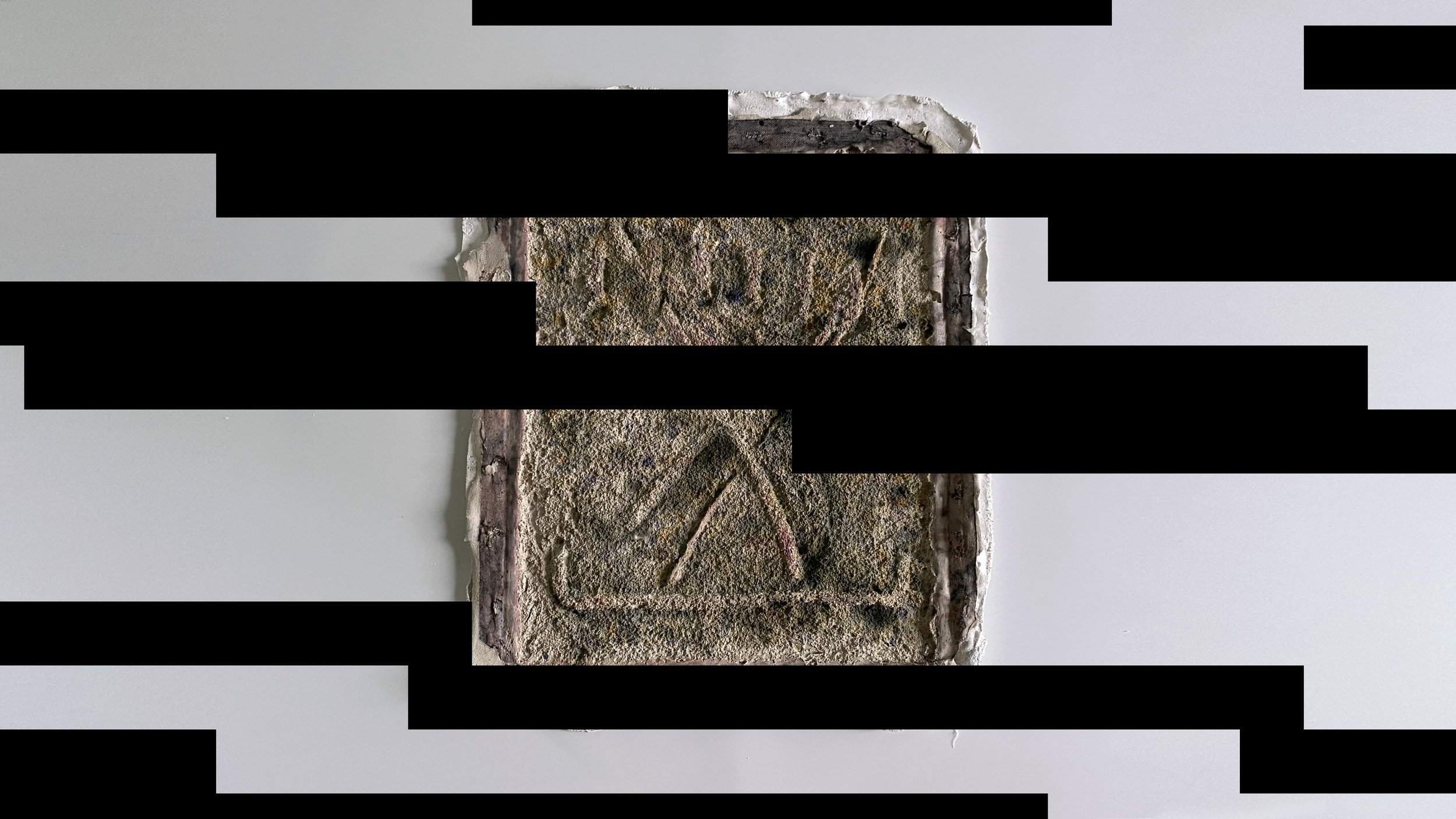
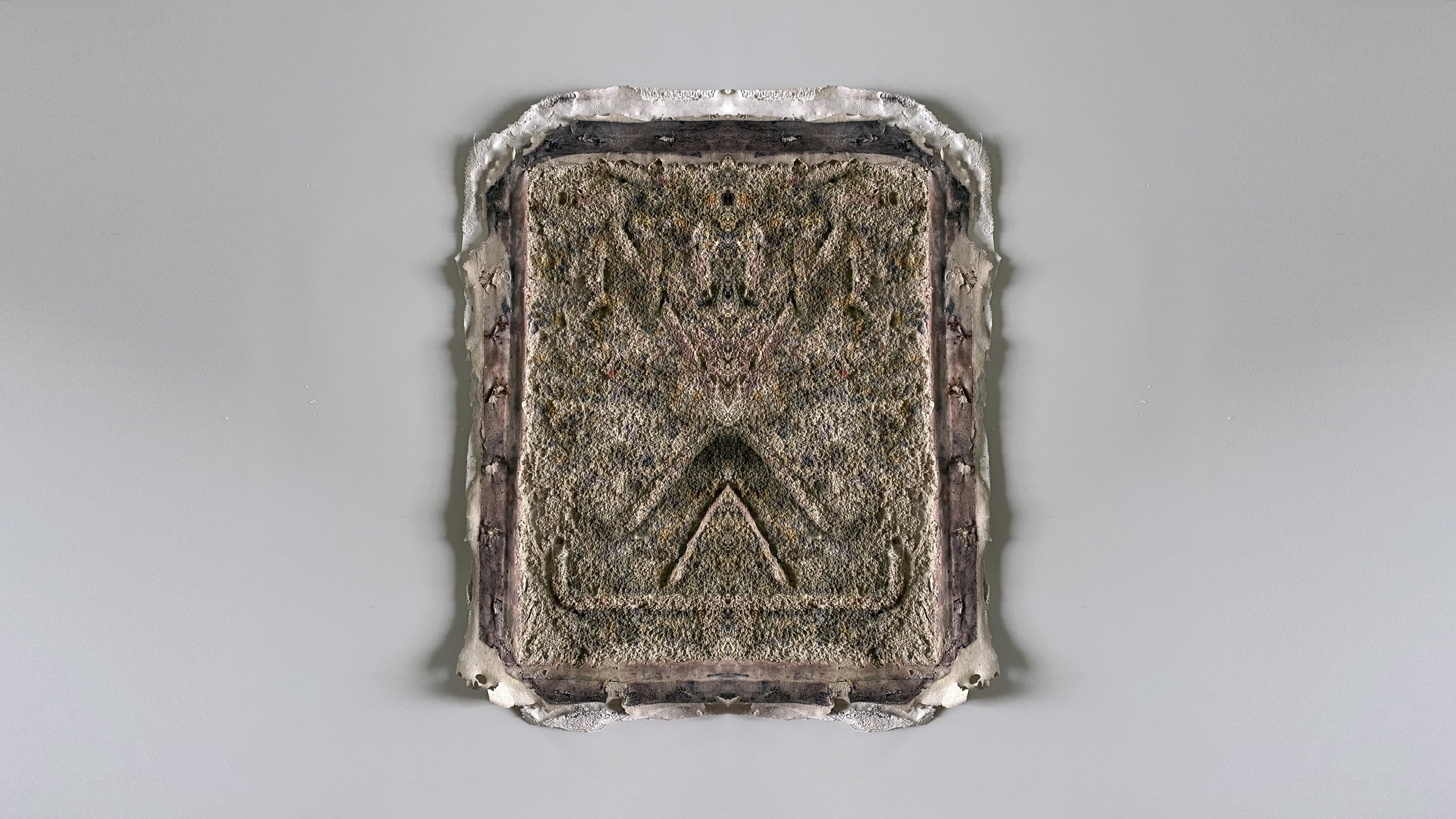
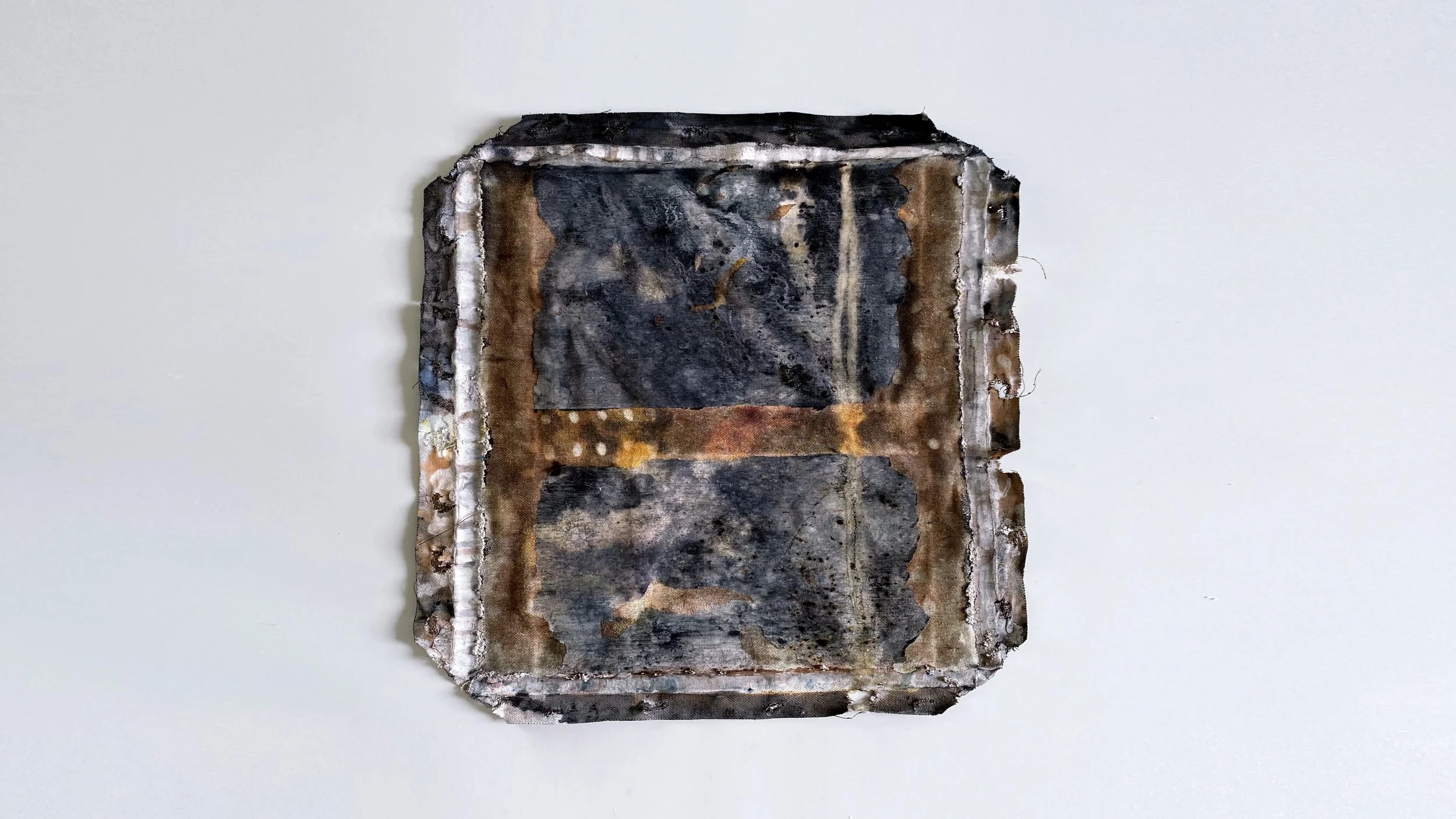
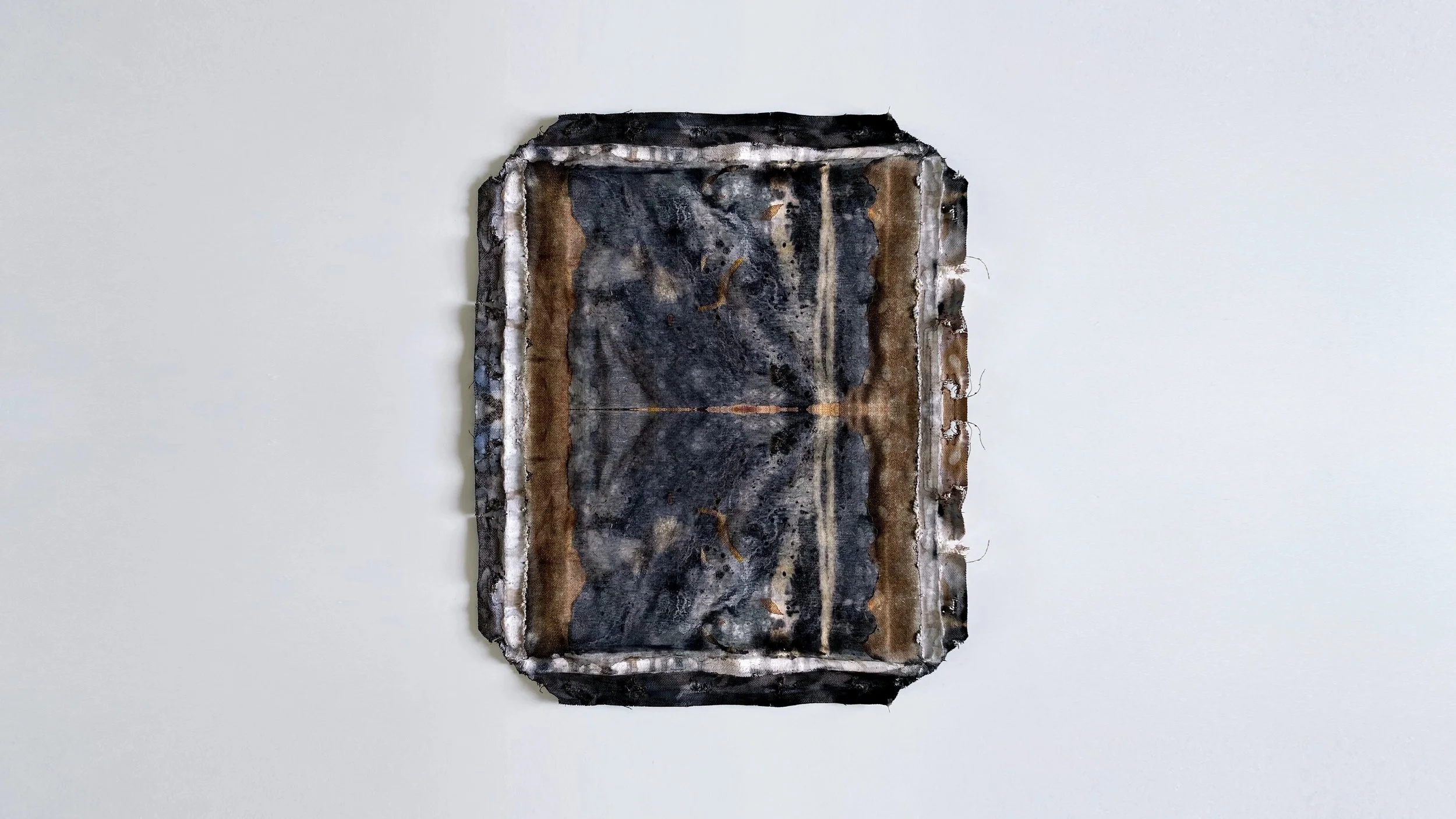
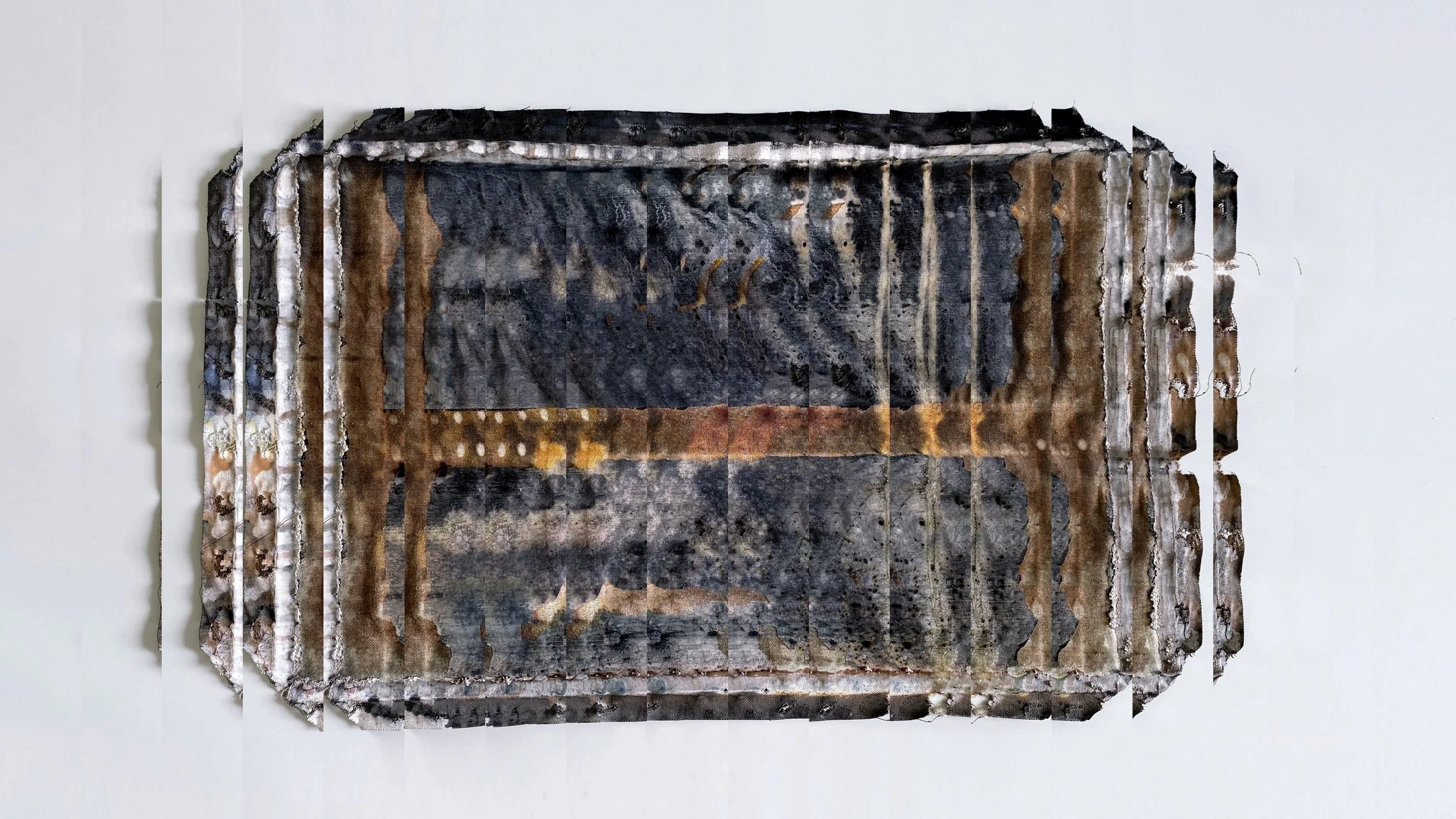
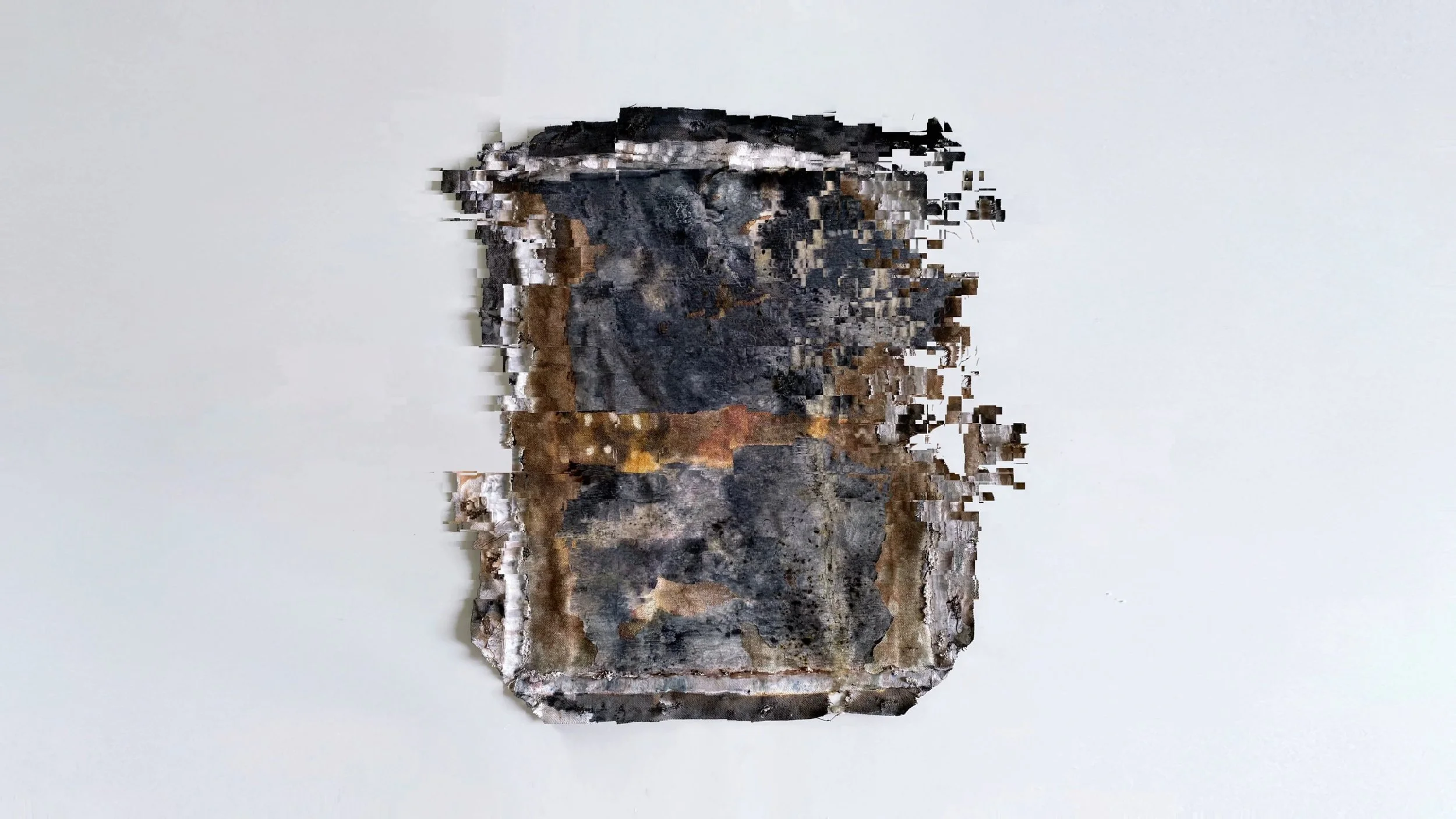
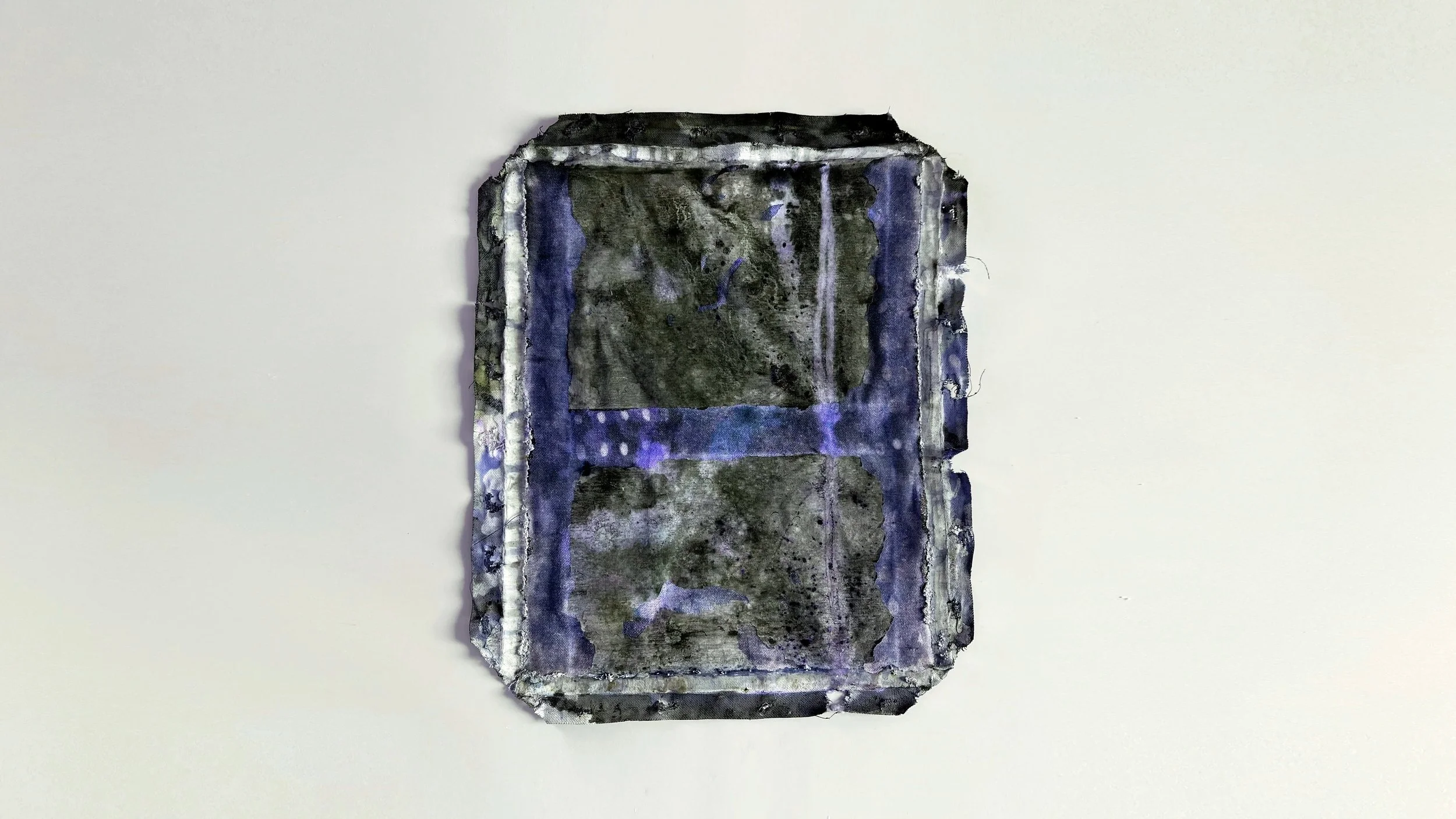
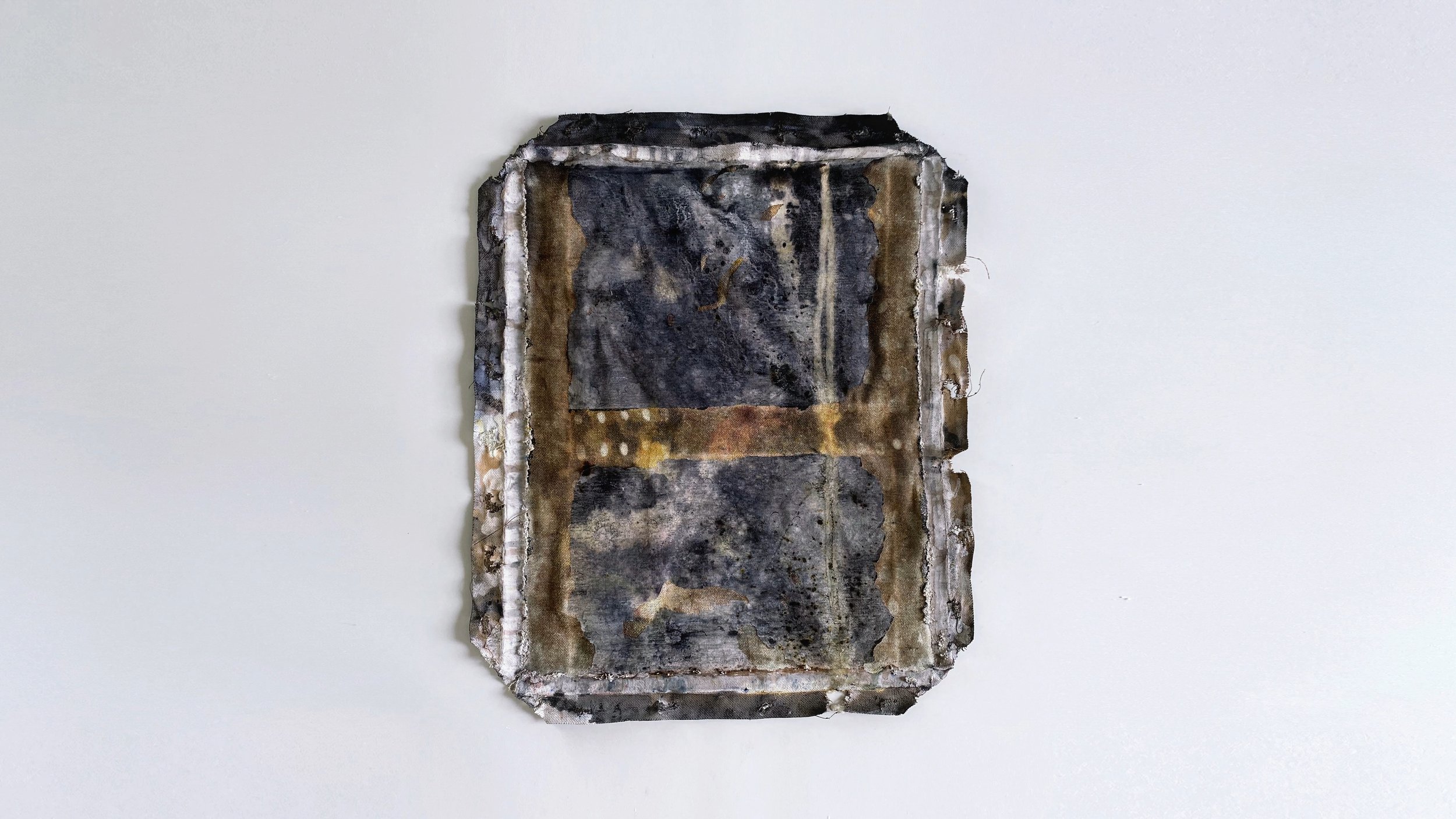
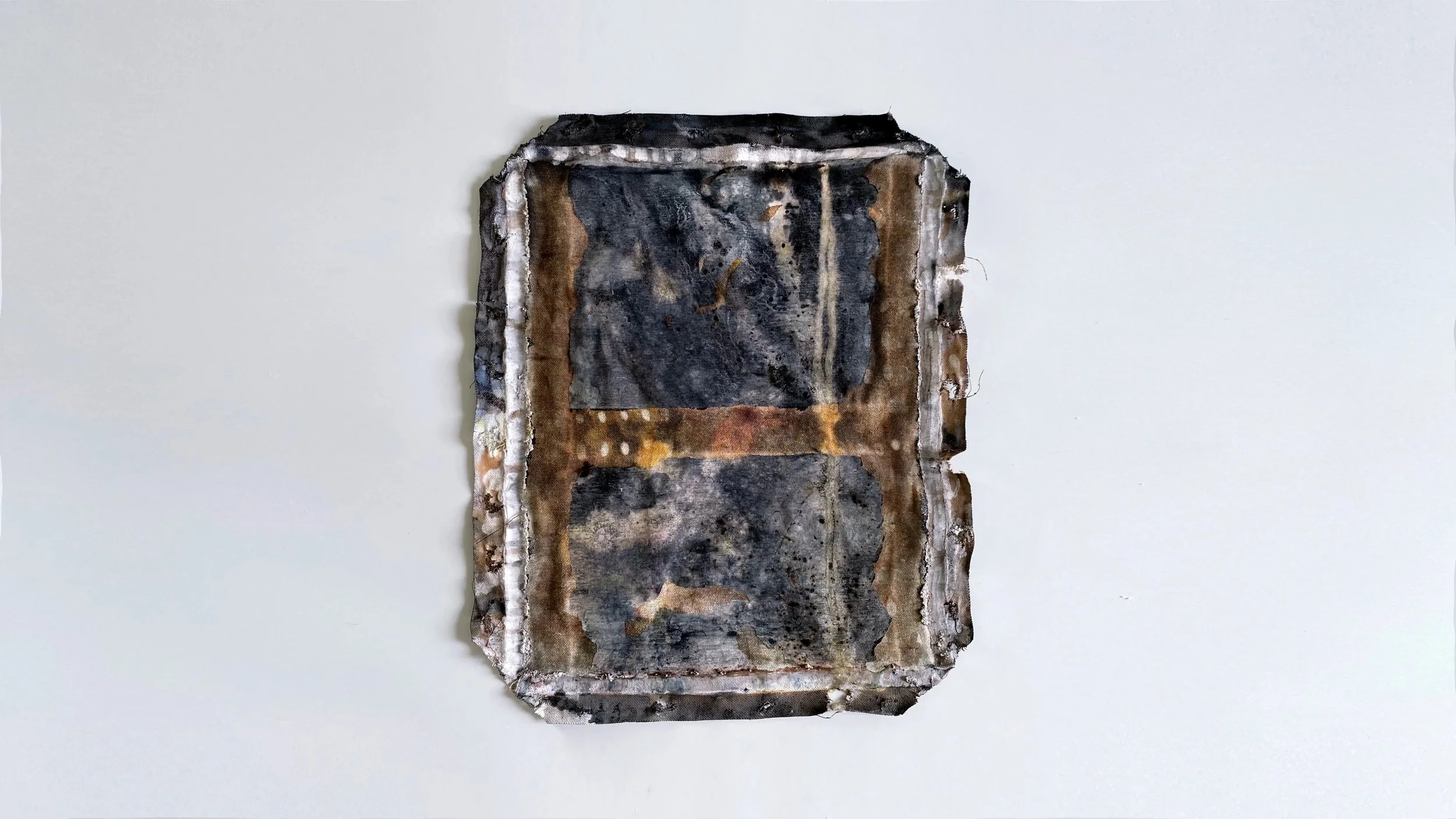
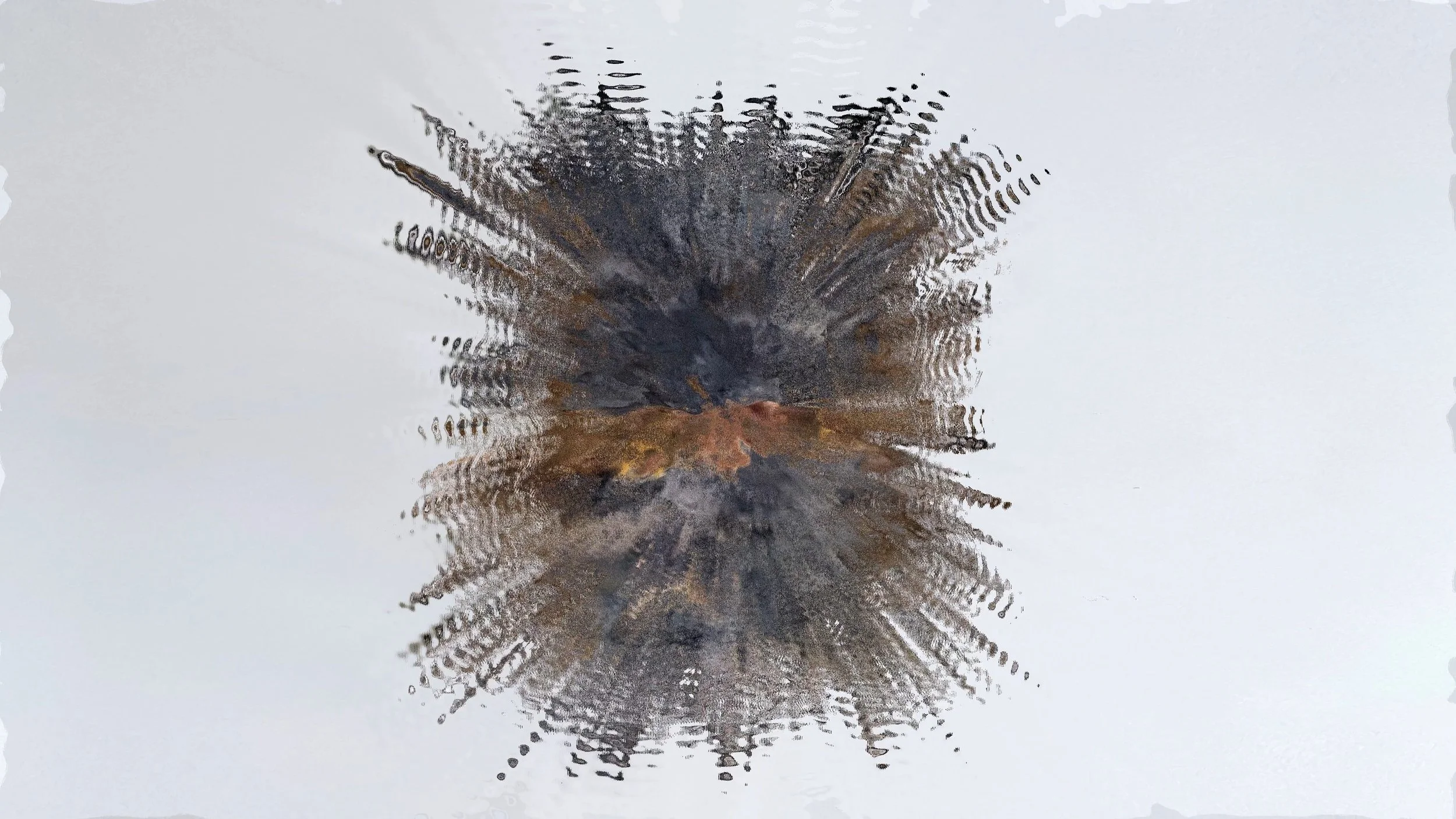
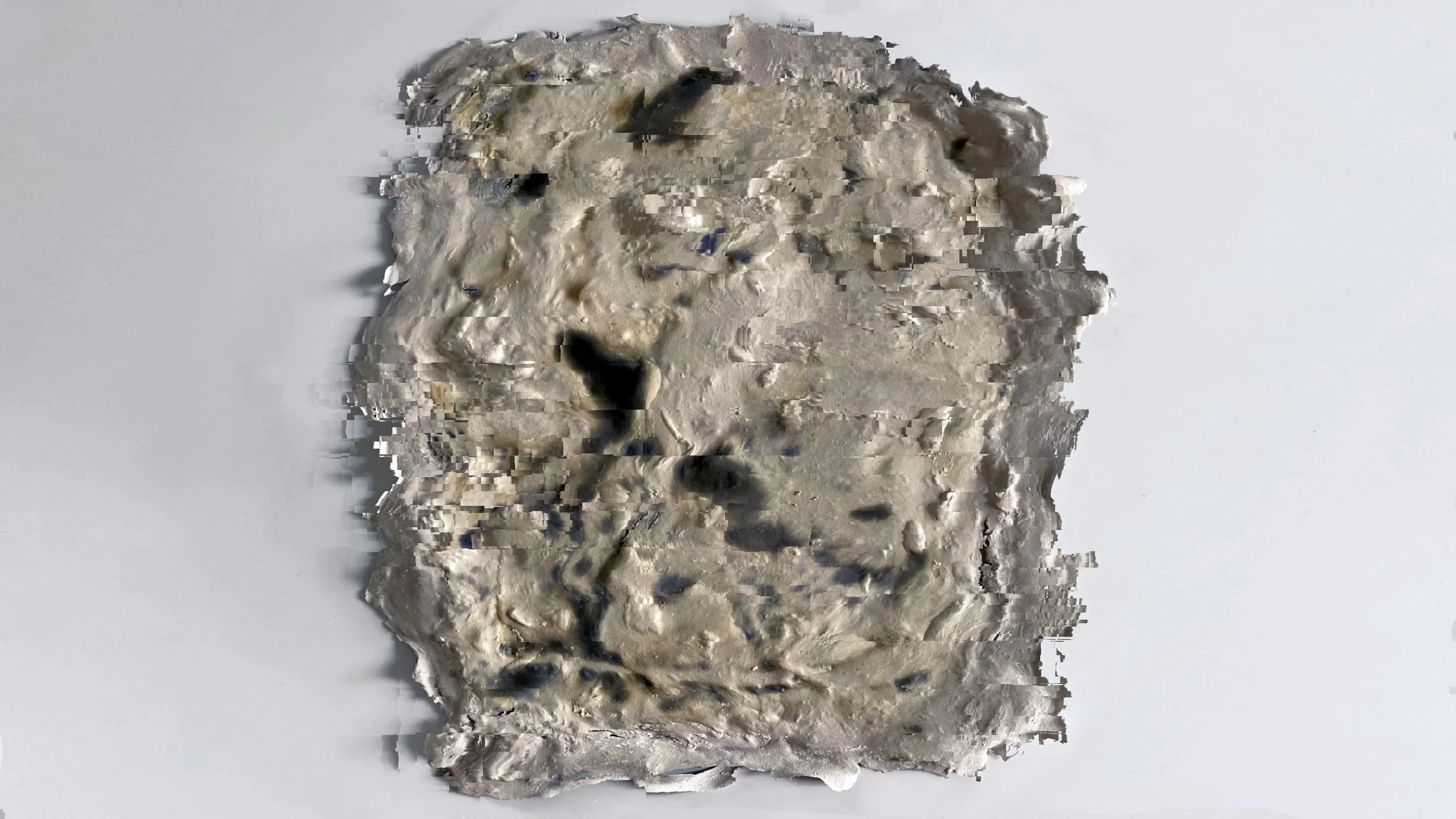
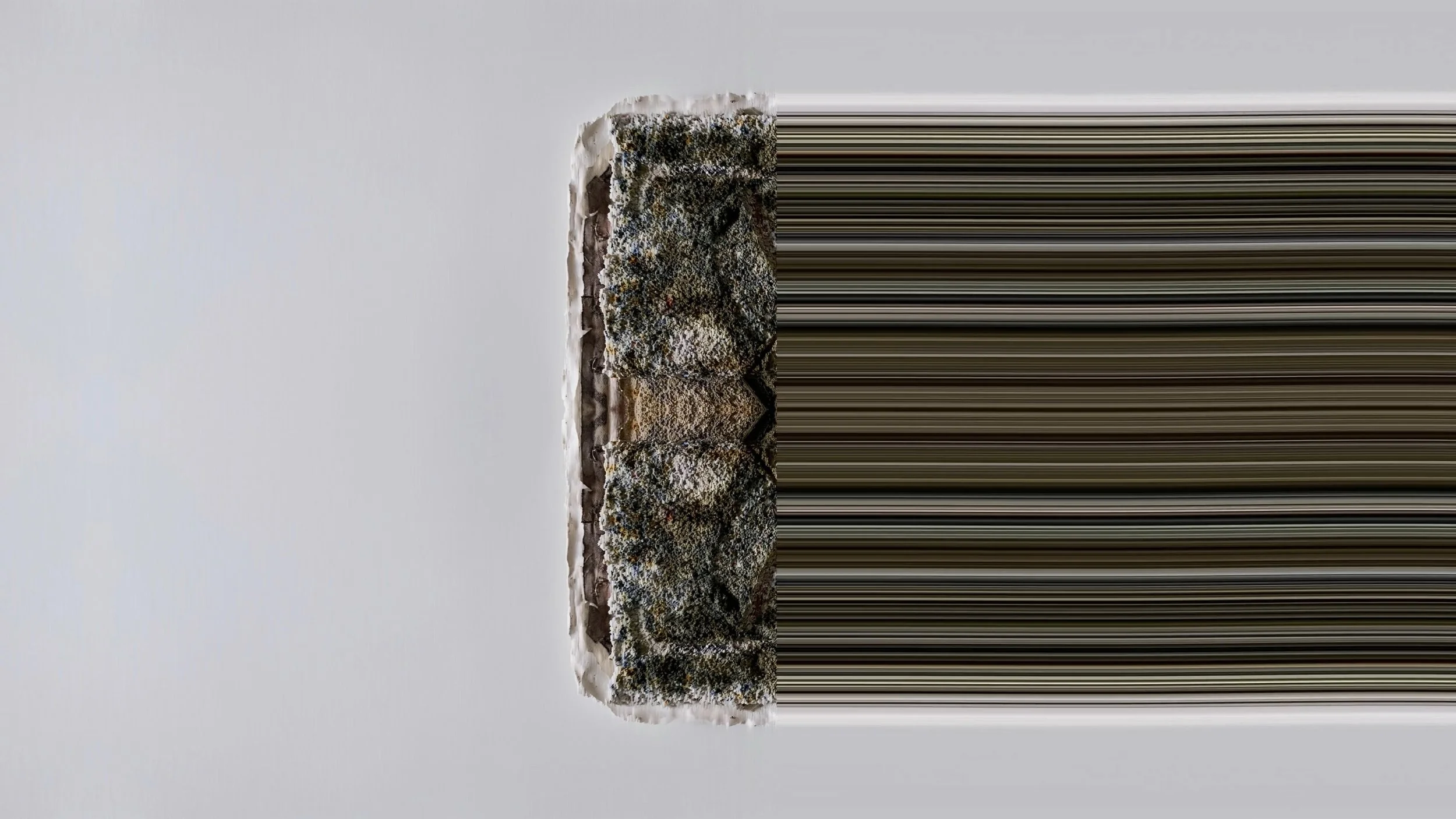
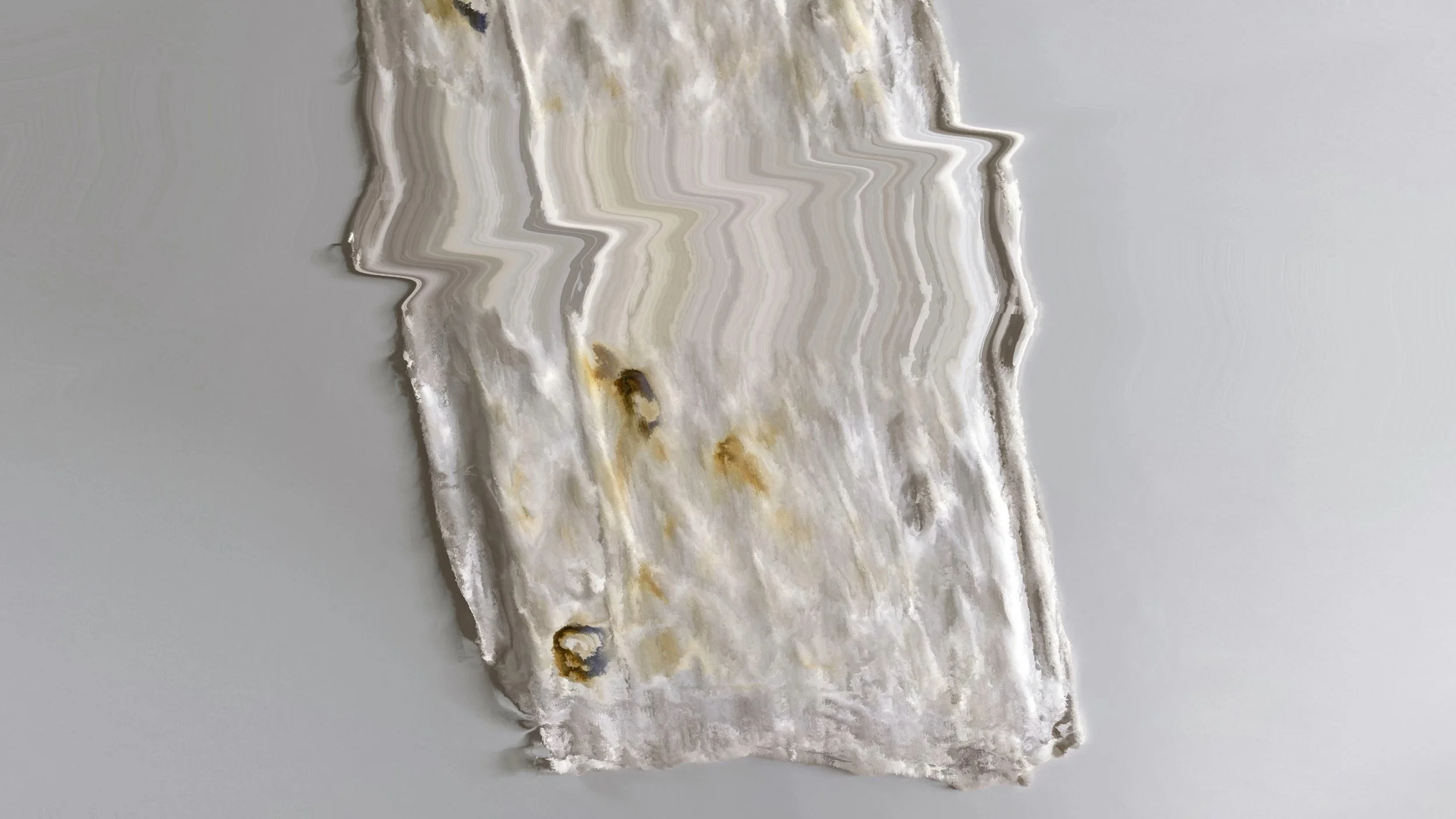
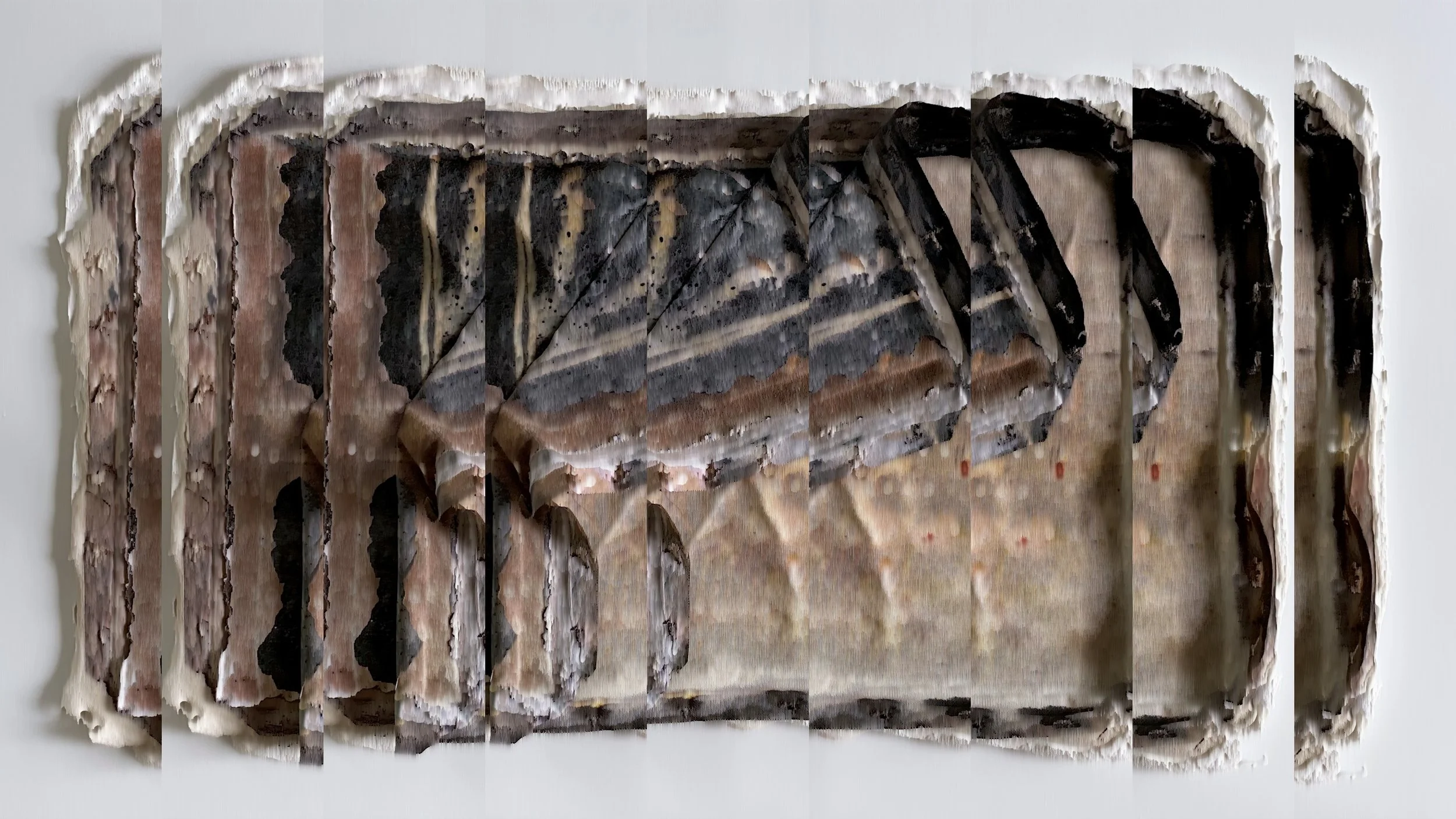
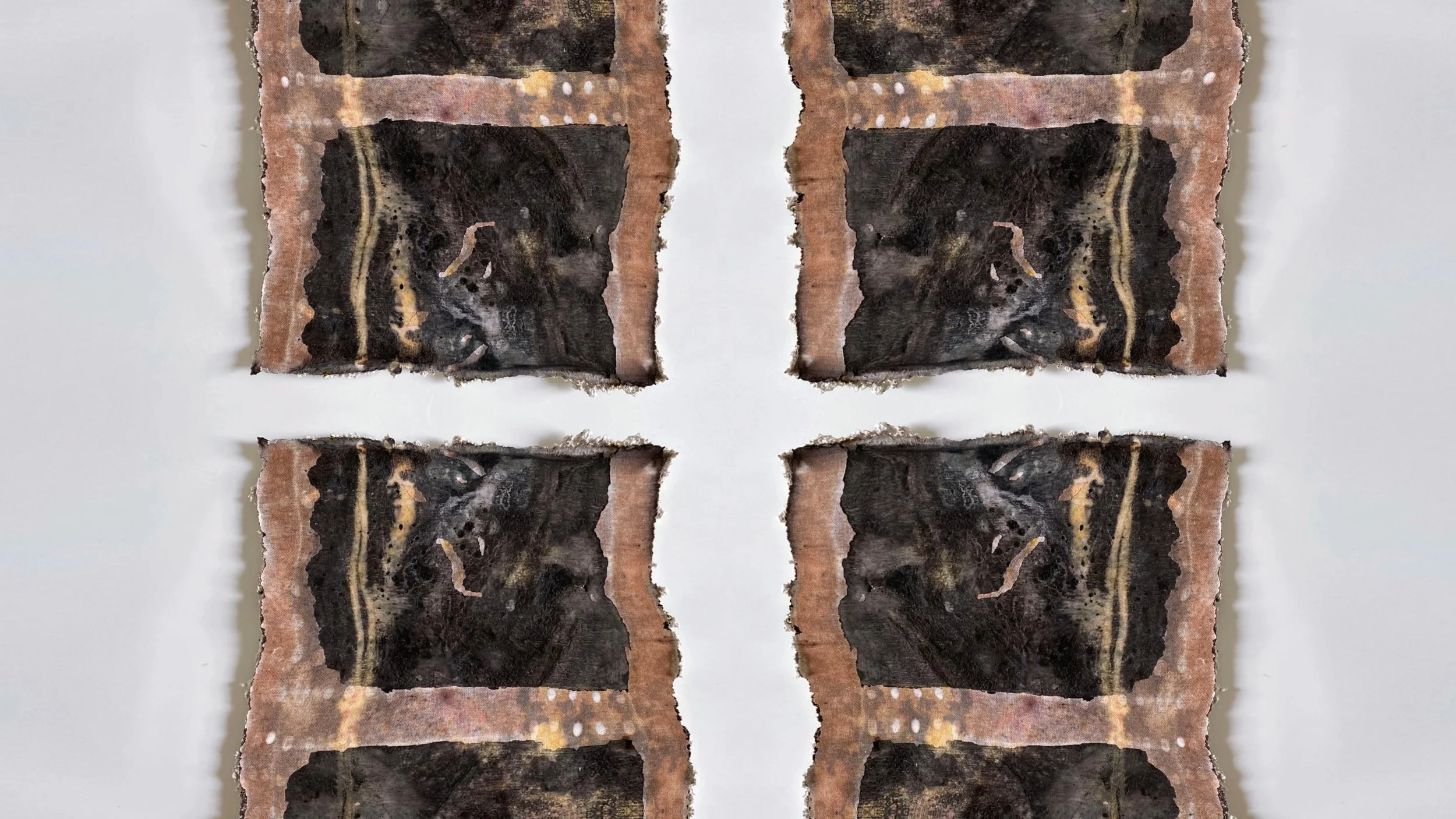
Material residues generated through physical action are re-entered digitally and reactivated through operations such as smearing, fragmenting, masking, mirroring, and distortion. Each image represents a discrete reactivation state, resolvable as a still image, in which residue is neither corrected nor stabilized but held in suspension.
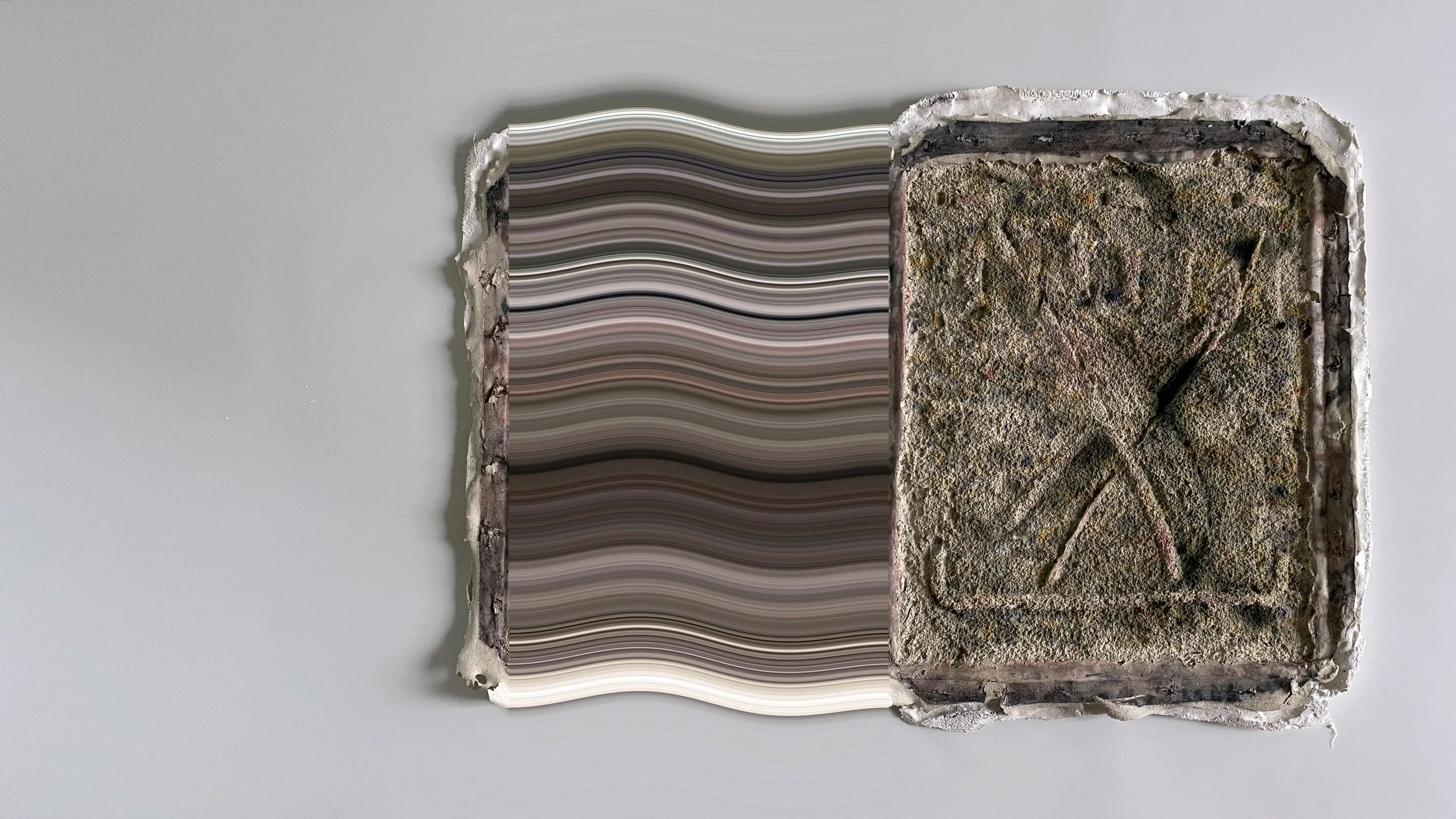
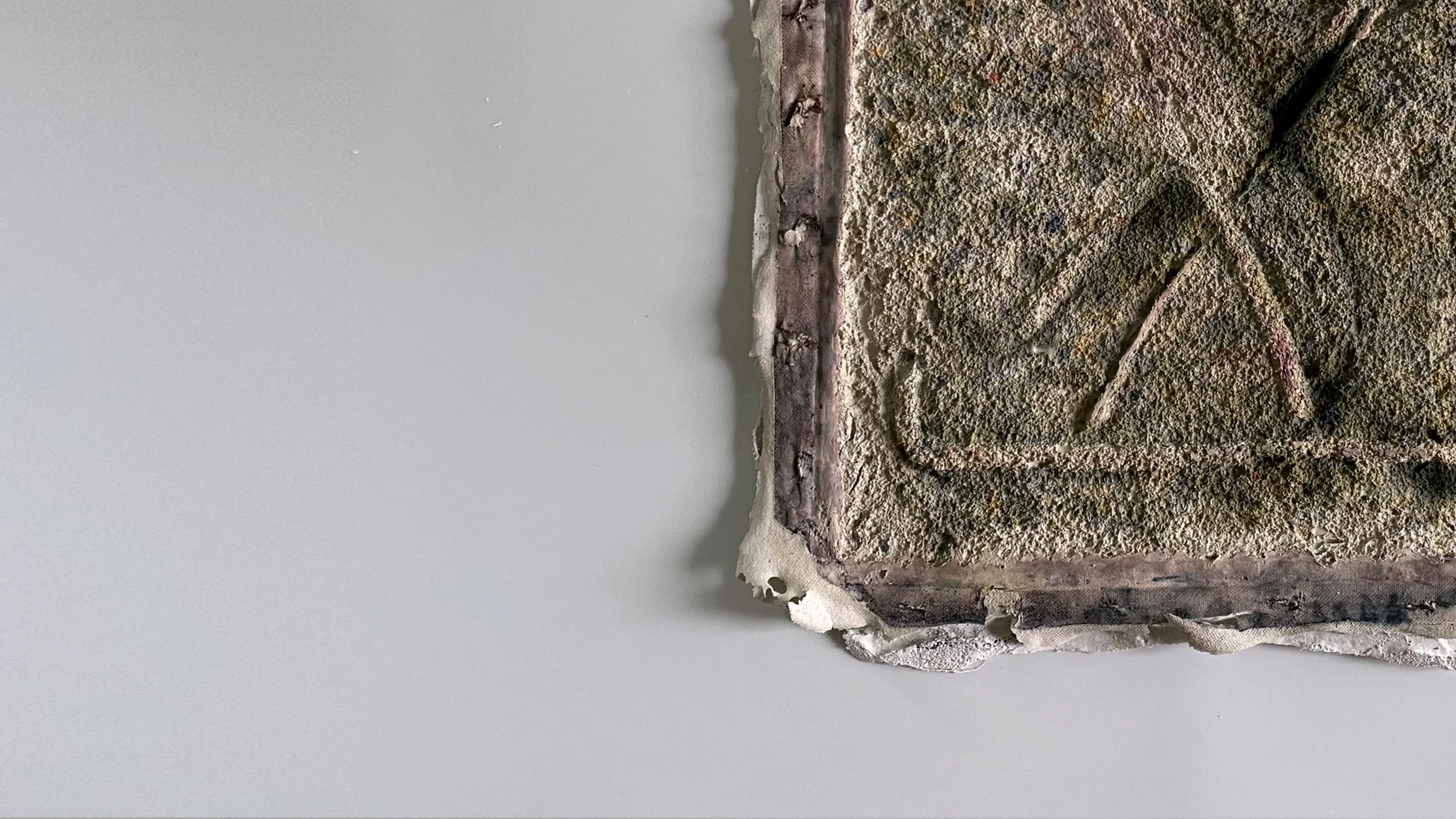
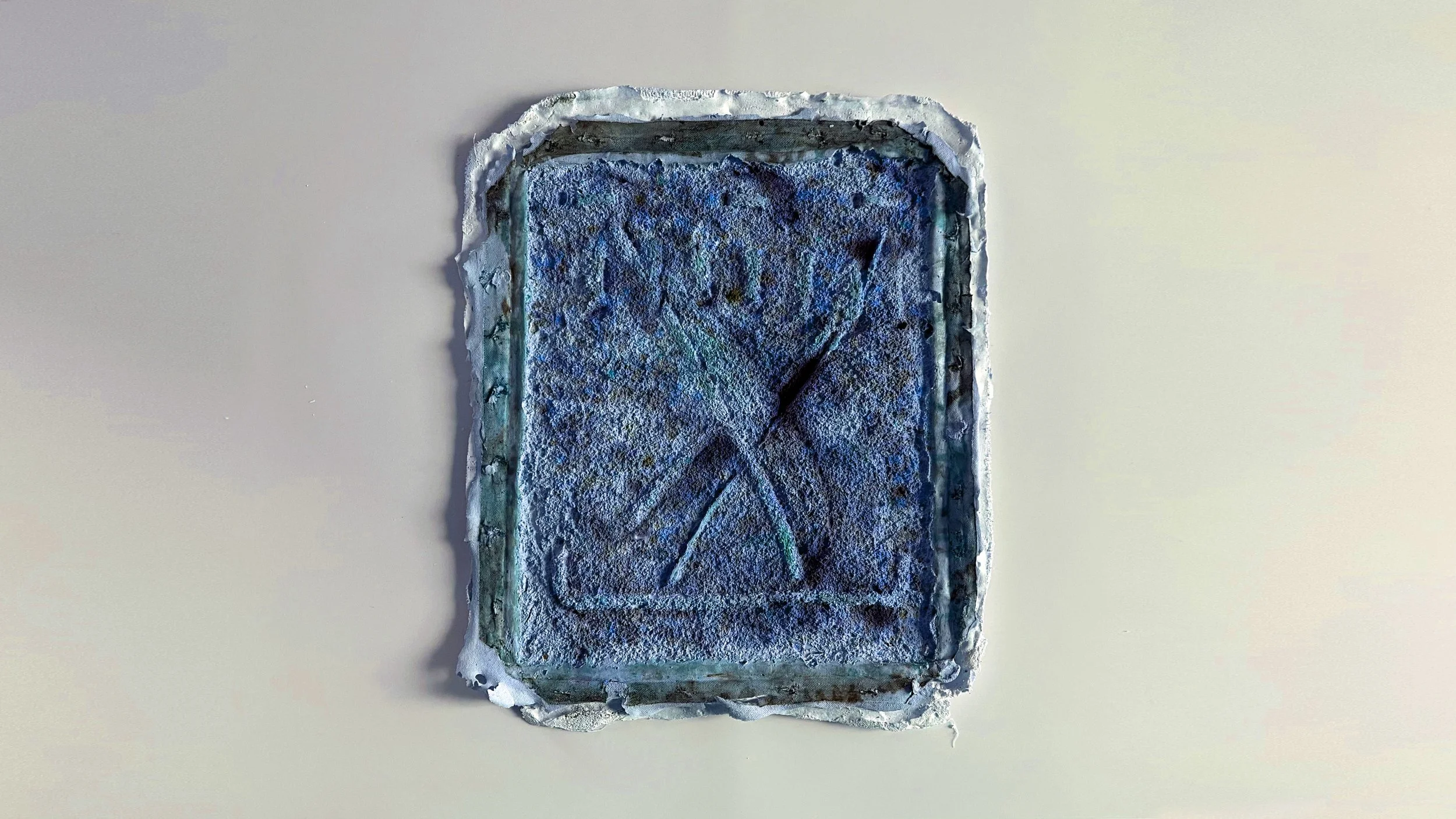
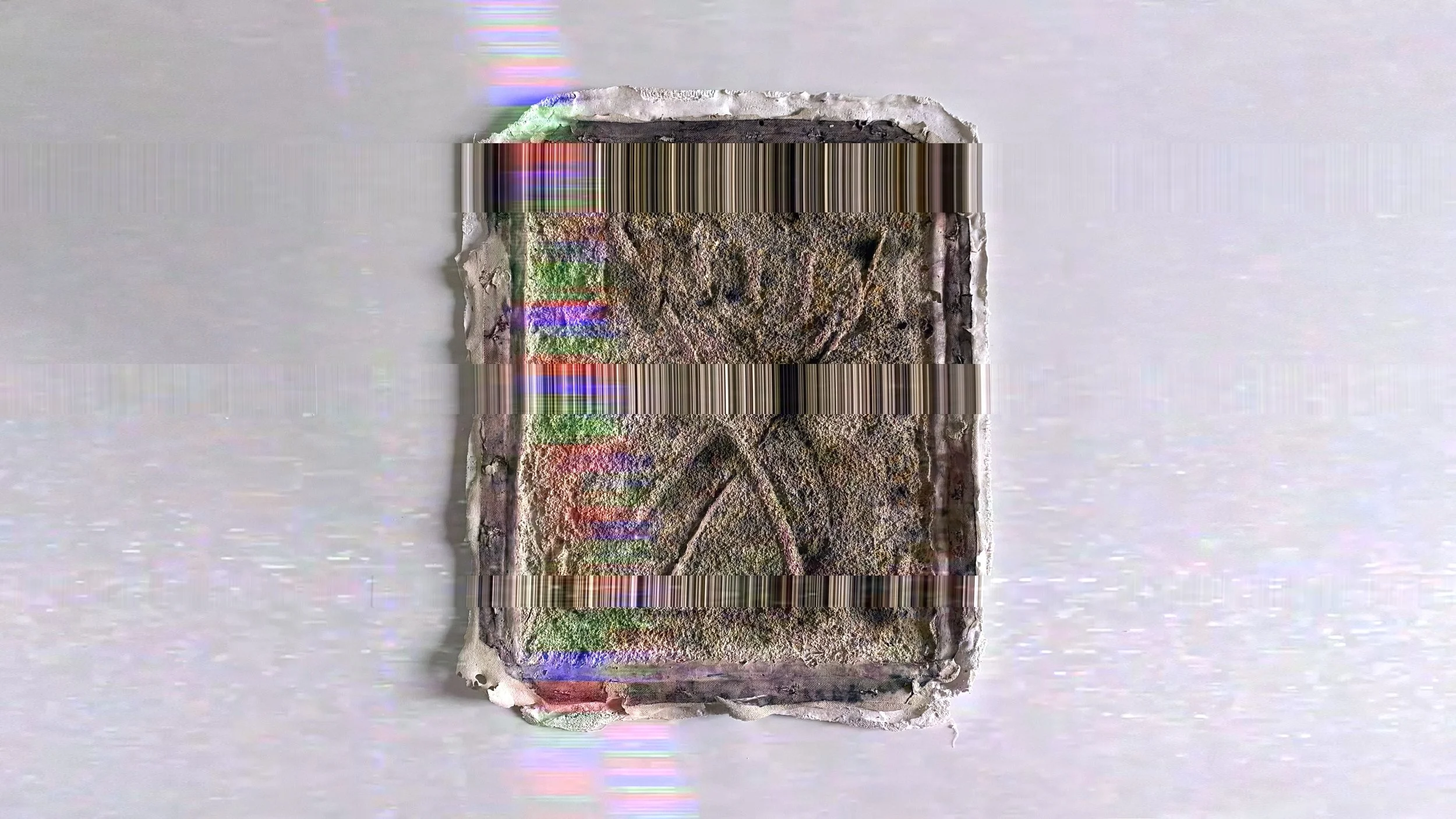
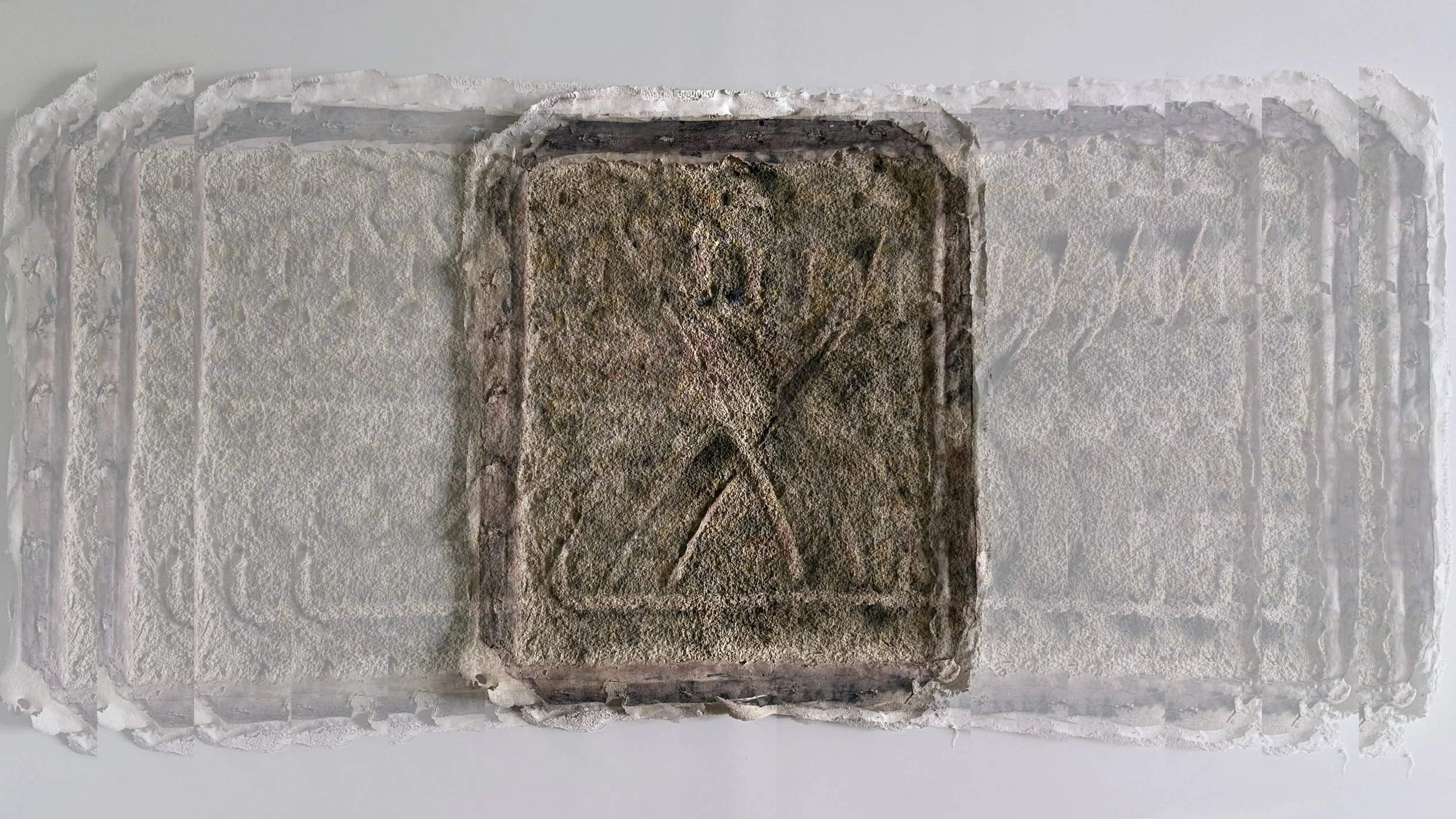
C: Loop Conditions
Temporal behaviors shaping how residue persists, erodes, or resets
Time is introduced through looping structures that actively govern perception and continuity. These works examine behaviors such as pulse, stall, accumulation, erosion, and reset, treating the loop as an operative condition rather than a neutral container.
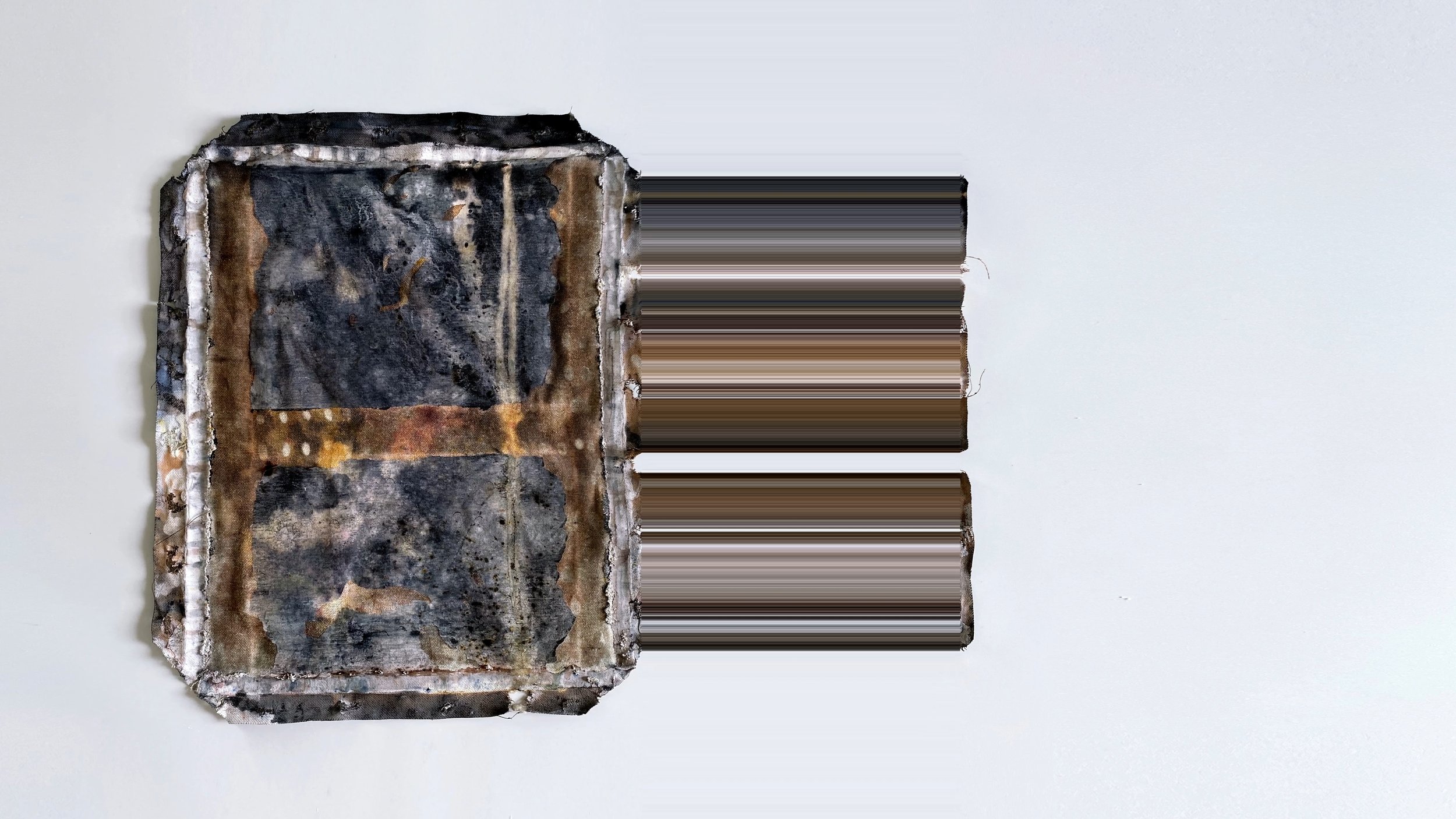
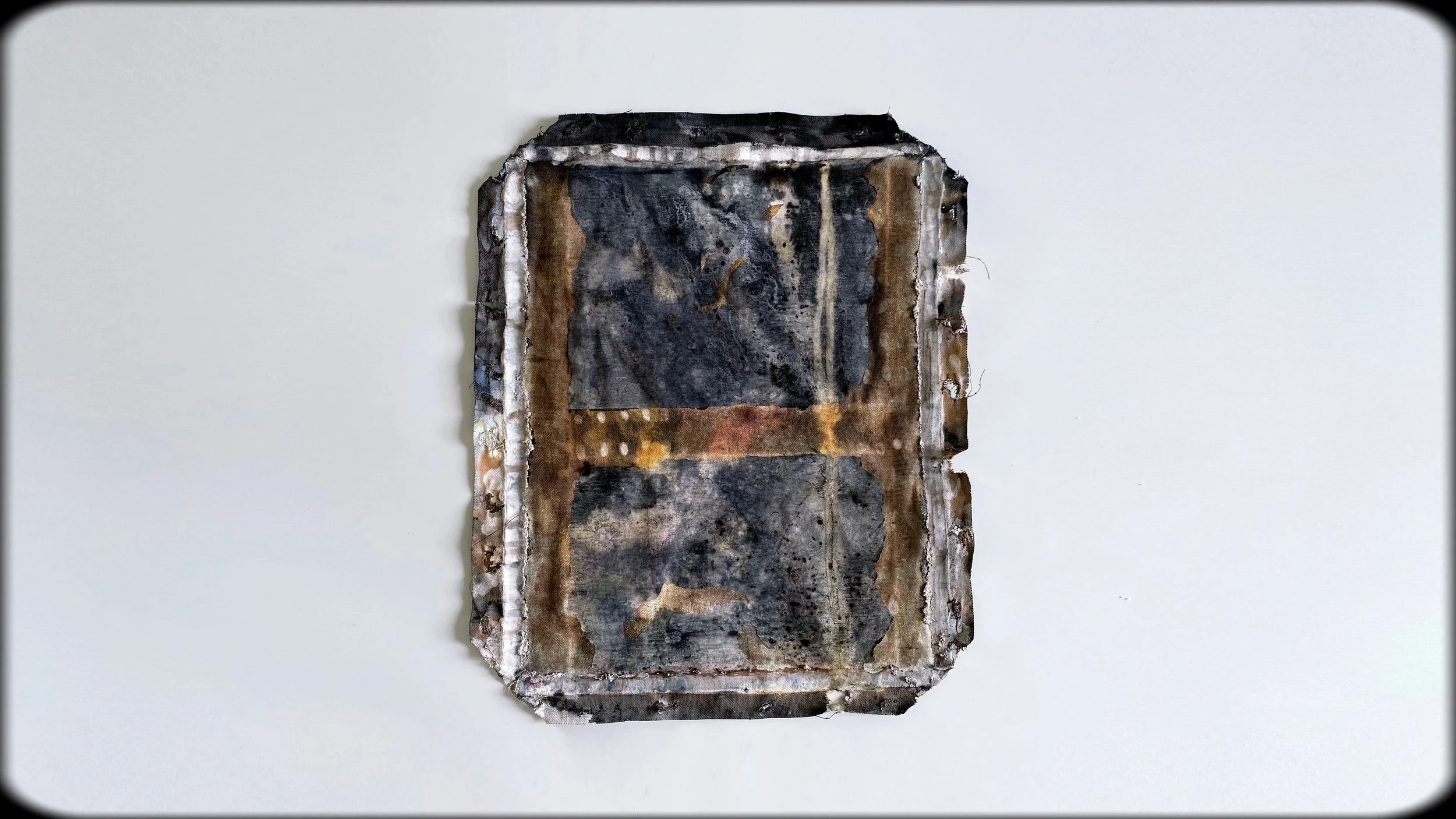
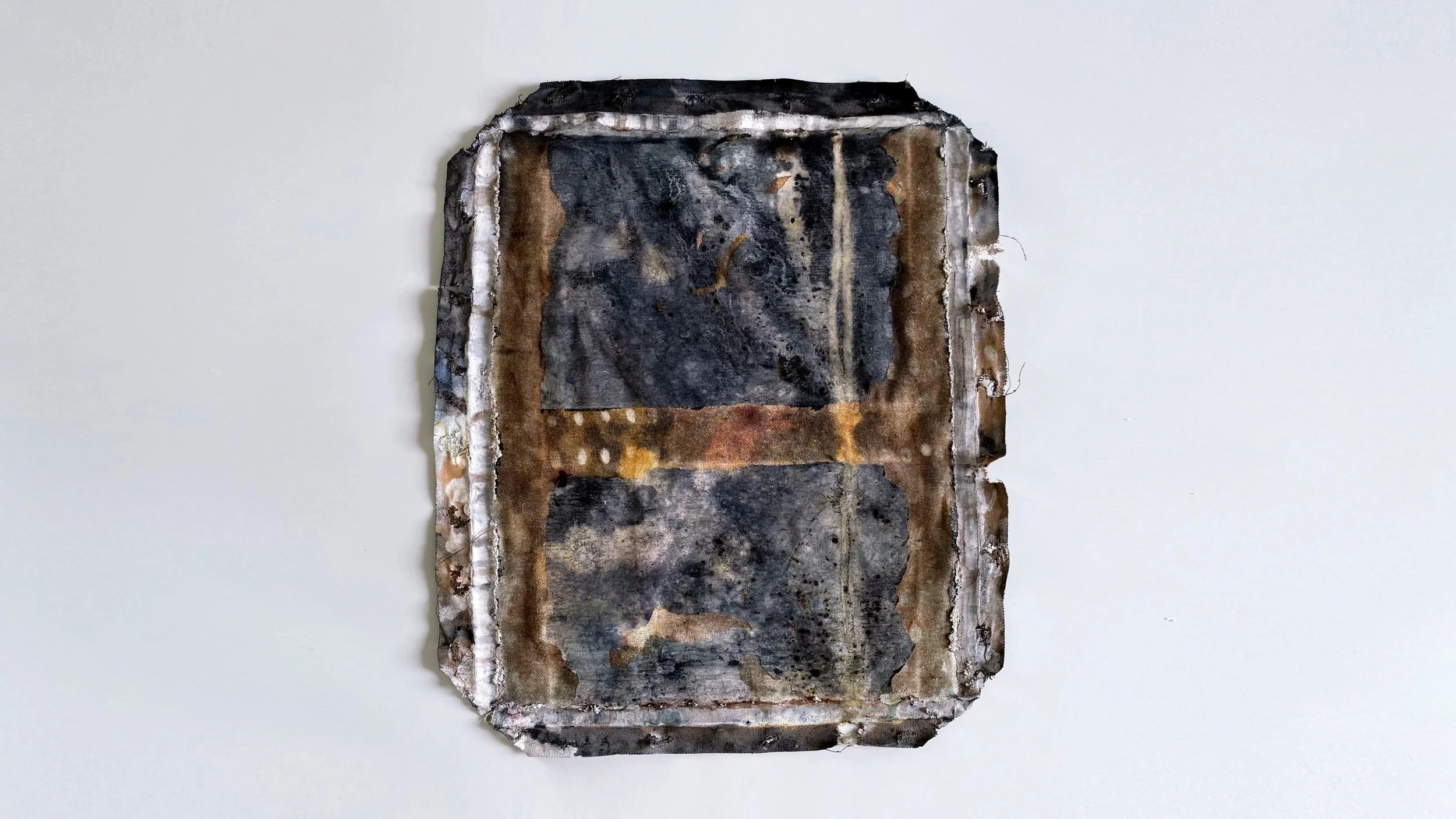

D: Bound-Set Types
Finite configurations of the research system
This section maps the complete set of seven bound-set types that structure the research system. Each type specifies which parameters—material action (A), digital reactivation (B), and temporal behavior (C)—are held constant and which are permitted to vary. The section demonstrates system closure and legibility through rule configurations, not the presentation of finished works.
SELECTED WORKS
E: Type 5 Bound Set
Visual variation within a fixed system
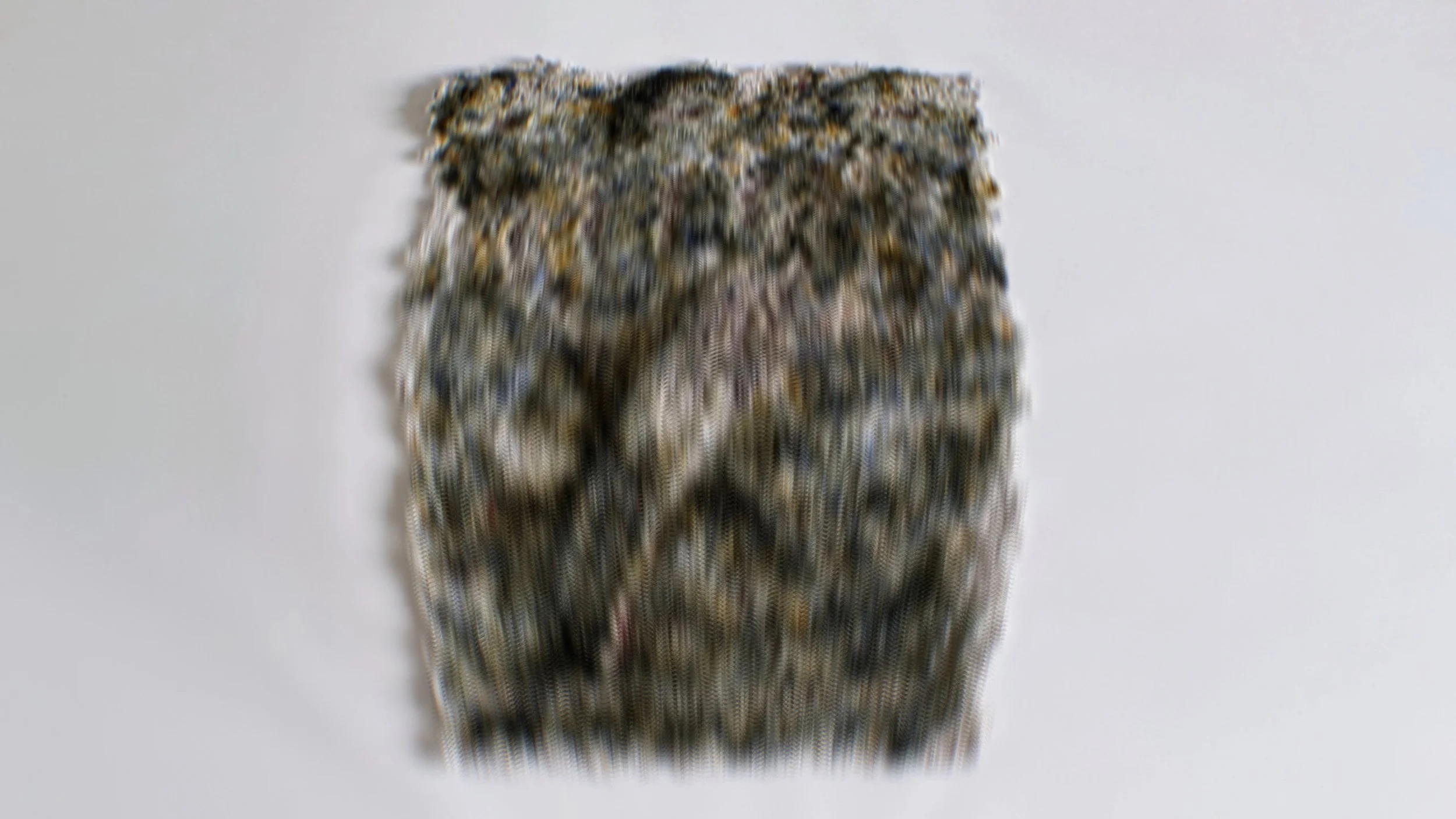
This section presents a Type 5 bound set in which the digital condition ghost (B) is held constant while material action (A) and temporal behavior (C) vary. Each work runs on an infinite 47 second loop, a duration chosen to sit at the edge of sustained attention, before perception settles into resolution. Ghost is not used as an effect but as a constraint. By fixing this condition, the works track how the same impulse returns, thins, misaligns, or disappears as it circulates through different material and temporal states, without resolving into stable image or narrative. Video projections have flashing lights and motion effects.